LED Light Therapy
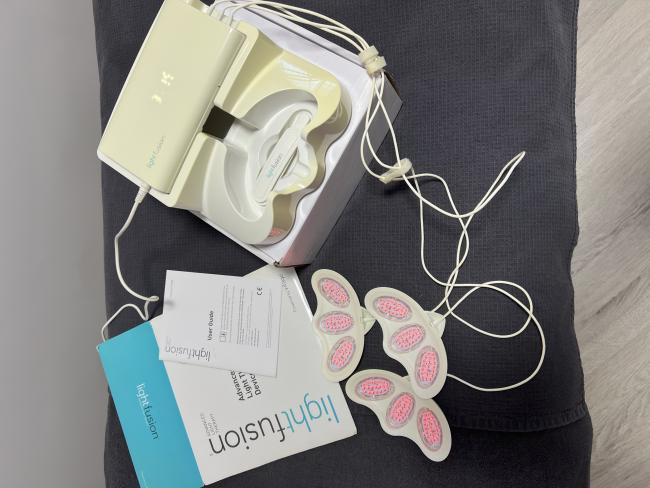
LED (light-emitting diode) therapy uses low-level, non-thermal light in specific wavelengths, usually delivered by a mask or panel held close to the skin, to prompt gentle changes in the cells. It is a non-invasive, needle-free treatment often chosen for congestion and blemish-prone skin, dullness, redness or as a comfortable finishing step after facials and other procedures. Different colours reach different depths and are used for different aims: red and near-infrared are typically used to support a plumper, calmer look, while blue is often used for blemish-prone skin. LED does not remove layers of skin, so it suits most skin types and tones. It works best as a gradual, cumulative treatment, meaning a short course over several weeks tends to give clearer results than a single session, with occasional top-ups to maintain them. Evidence is still developing and outcomes vary from person to person, so it is best viewed as a supportive skin-health treatment rather than a quick fix or a replacement for medical dermatology. Results can be tailored by adjusting the wavelength, session length and course frequency to your skin and your goal, ideally after a proper consultation with a trained skin therapist.
Come to your appointment with clean, product-free skin where possible, as make-up, heavy moisturiser, mineral sunblock and pigmented products can block or scatter the light. Your therapist will usually cleanse the area first. It is sensible to pause strong actives such as retinoids, benzoyl peroxide and glycolic or salicylic acids for a few days beforehand, because these can leave the skin more reactive. Tell your practitioner about any medicines or supplements that increase light sensitivity, including certain antibiotics like tetracyclines, and about any recent skin treatments, peels or laser work. Avoid fake tan and recent sunburn on the area. If you have a history of light-triggered conditions, epilepsy or seizures set off by light, eye problems or recent eye surgery, raise this before booking so suitability can be checked. Arriving well hydrated and giving an honest skin and health history helps your therapist choose the right wavelength and settings, and reduces the small chance of an unexpected reaction.
A session is calm and painless. After cleansing, you will lie back and eye protection, such as goggles or pads, will be placed over your eyes, since the light is bright and staring into it should be avoided. A mask or panel is then positioned close to the skin, or rested gently on it, and switched on for a set time, commonly around ten to twenty minutes. The device may feel slightly warm but should not be hot or uncomfortable. You will see coloured light through your closed lids and may notice a gentle glow around the room. There is no needling, cutting or peeling involved, so nothing should sting or break the skin. Many people find it relaxing and some drift off. Your therapist may combine it with other steps, such as a serum, mask or facial, or use it on its own. Sessions are often repeated as a short course spread over several weeks, because the benefit tends to build up gradually rather than appearing all at once.
LED is gentle, so aftercare is simple. Your skin may look a little flushed straight afterwards, which usually settles within an hour or so. You can normally moisturise and apply make-up the same day. Because light treatments can leave skin marginally more reactive, apply a broad-spectrum SPF and limit strong sun exposure for a day or two, and keep up daily SPF as good routine skincare in any case. Keep the skin well hydrated and, for the rest of the day, favour soothing products over strong actives such as retinoids and acids, reintroducing them once any redness has fully settled. Drinking plenty of water supports general recovery. If you have had LED as a finishing step after a more active treatment, follow the aftercare for that main treatment as the priority. Most people carry on with their day as normal. If you notice lasting redness, stinging, itching or any rash that does not settle quickly, stop and contact your practitioner for advice.
Although LED is low-risk and non-invasive, safe treatment still depends on a competent, trained practitioner using a well-maintained, properly certified device at the correct wavelength, distance and timing for your skin. Eye protection is important, because the light is bright and prolonged direct exposure can strain or potentially harm the eyes, so goggles or pads should always be offered and you should never stare into the light. A good practitioner screens for contraindications first, including light-sensitive conditions, photosensitising medication, epilepsy or seizures triggered by light, active skin infections or unexplained lesions, and recent eye surgery. Devices should be cleaned between clients. Professional in-clinic units are generally stronger than home masks, so settings and session length should be matched to you rather than pushed to extremes. If your skin stings, burns or stays red well beyond the session, treatment should stop. LED should never be sold as a cure for medical skin disease; persistent or worsening skin concerns need a GP or dermatologist.
LED is best treated as a supportive skin treatment, not medical care, and it should not be used to diagnose, treat or replace management of a medical condition. Some people should take particular care or seek medical advice first. This includes anyone with light-triggered conditions such as porphyria, lupus, polymorphic light eruption or photosensitive eczema, and anyone with epilepsy or seizures that can be set off by light. Certain medicines and supplements increase sensitivity to light, including some antibiotics such as tetracyclines and doxycycline, some acne medicines and St John's Wort, so check with a pharmacist or GP if you are unsure. People with eye conditions, or who have had recent eye surgery, should get medical clearance because of the bright light. Pregnancy is often treated as a precaution by clinics even though LED is non-thermal, so many will ask you to wait or seek your midwife's view. If you have any suspicious or changing moles or lesions, see a GP or dermatologist before cosmetic light treatment.
A skin patch test is not the usual requirement for LED, because it involves no dyes, chemicals or needles that commonly trigger allergy. What matters far more is a proper pre-treatment consultation that screens for contraindications, so your practitioner should ask about light-sensitive conditions, photosensitising medication, epilepsy or light-triggered seizures, eye problems or recent eye surgery, pregnancy, active infection and any suspicious skin lesions before starting. For sensitive or reactive skin, a shorter first session or a small trial area is a sensible way to check how you respond before a fuller course. This screening protects you and, from a UK liability point of view, protects the practitioner too: skipping the health check and settings review can leave an insured therapist found at fault if a reaction or eye problem occurs. Honest answers about your health and medicines are the single most useful safeguard.
Be cautious if no one asks about your health, medicines, eye history or light-sensitive conditions before treatment, or if eye protection is not offered and you are told to keep your eyes open under the light. Warning signs include a practitioner claiming LED will cure a medical skin disease, dramatic overnight results or replace prescribed treatment; these are overstatements. Dirty equipment, a mask that is not wiped between clients, or a device that feels hot rather than gently warm are concerns, as is being pushed into very long sessions or an expensive multi-session package with no consultation. During treatment, stinging, burning, headache or eye discomfort should mean stopping. Afterwards, redness that lasts well beyond an hour, blistering, a new rash or swelling is not normal for LED and should prompt you to seek advice.
Good practice starts with a proper consultation and a health and skincare history taken before any light is switched on, with time to discuss what LED can and cannot realistically do. A trustworthy practitioner is trained in the device they use, holds appropriate insurance, and works from clean premises with equipment wiped between clients. They will offer eye protection as a matter of course, position the device at the correct distance and time the session sensibly rather than pushing extremes. They should be honest that results build over a course and vary between people, tailor the wavelength and plan to your skin and goal, and be comfortable saying LED is not right for you or referring you to a GP or dermatologist where a concern is medical. Clear pricing, written aftercare and no pressure to buy large packages are all reassuring signs.
- What training and qualifications do you have in LED therapy, and is the device medically certified and maintained?
- Which wavelengths or colours will you use for my skin, and why are they suited to my concern?
- Will eye protection be provided, and how do you keep the device clean between clients?
- Do any of my medicines, supplements or health conditions make LED unsuitable or riskier for me?
- How many sessions do you realistically expect I will need, and what results can and cannot I expect?
- What should I do afterwards, and what signs would mean I should stop and contact you?
LED is one of the more comfortable skin treatments. Most people feel little more than a gentle, spa-like warmth and see coloured light through their closed eyes. There is no needling, cutting, pulling or peeling, so it should not sting or feel sharp. The device may feel mildly warm but never hot, and many find the experience calming and even a little sleepy. Some people notice a faint after-glow or slight flushing on the skin once the mask is removed, which soon fades. If at any point you feel burning, real heat, a headache or any eye discomfort, tell your practitioner and the session should stop. Anything painful is not a normal part of LED.
There is typically no downtime with LED therapy, which is one of its main attractions. Most people return to work, exercise and normal activities straight away, and make-up can usually go on the same day. Any mild flushing or warmth generally fades within an hour. Because the treatment does not break the skin or remove layers, there is no peeling, scabbing or bruising to recover from. The trade-off is that results build gradually, so a course of sessions over several weeks is usually needed before changes become noticeable. If your skin feels tight or slightly sensitive afterwards, a simple moisturiser and SPF is normally all that is required.
LED works gradually, so results tend to build over a course rather than appearing after one session. Many clinics suggest a run of sessions, often once or twice a week over several weeks, followed by occasional top-ups to maintain the benefit. Because the effect is cumulative and not permanent, skin can drift back towards its previous state once treatment stops, so ongoing maintenance sessions or a home device are usually needed to keep results. Outcomes vary from person to person and the evidence is still developing, so it is fair to expect gradual, supportive improvement rather than a dramatic or lasting transformation. You will get more from LED by pairing it with a consistent skincare routine, daily SPF and realistic expectations. Your practitioner can tailor the wavelength, session length and frequency over time to match how your skin responds and what you are trying to achieve.