Key takeaways
- Most professionals in the 2026 Therapist Well Being Report had felt emotional fatigue, yet almost all found their work fulfilling.
- Kind boundaries, quiet appointment options and buffer time protect your energy without losing warmth.
- Know where to point clients for help, debrief after hard appointments and see your doctor or a counsellor if stress lingers.
Quick answer: Hair and beauty professionals carry a real emotional load, because clients often share grief, illness, relationship trouble and trauma in the chair or on the couch. You can protect yourself by setting kind boundaries, building recovery time into your diary, debriefing with someone you trust, knowing where to point clients for proper help, and getting professional support for yourself when it starts to weigh on you.
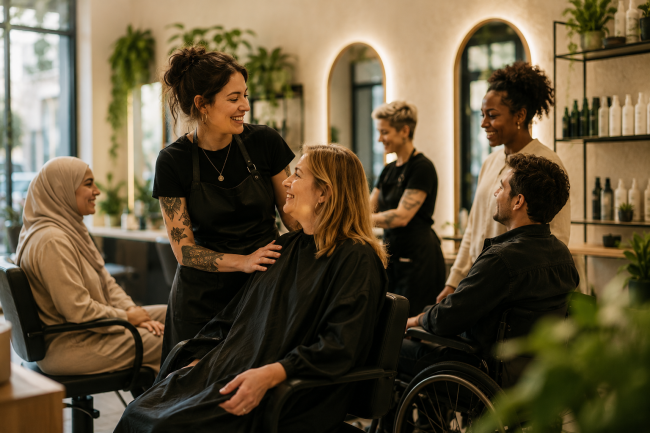
You know the moment. The gown goes on, the music is low, and within ten minutes a client is telling you about the diagnosis, the breakup or the loss they haven't told their family about yet. You listen, because that's what you do. It's a big part of why clients trust you, and a big part of why this work feels so meaningful.
Then the next client walks in. And the one after that. By the end of the day you've held a lot of stories, with nowhere to put them down.
This post is for you. Here's what the research tells us about the emotional side of salon, spa and treatment room work, and the simple habits that help you keep caring without running on empty.
The chair is a safe space, and that comes at a cost
Researchers in Australia have spent years listening to salon workers. Dr Hannah McCann at the University of Melbourne and Stacey Page found that hairdressers and beauty therapists regularly act as confidants, hearing about relationship breakdowns, domestic violence, cancer diagnoses, fertility struggles and depression. McCann's part of the work alone drew on 61 interviews and a survey of 383 salon workers and clients. Many workers said they felt unprepared for these conversations, had no gap between appointments to process them, and had nobody at work to debrief with afterwards. The report notes that Australian hair and beauty qualifications include no salon specific wellbeing training.
The picture is similar elsewhere. In a 2025 study of hairdressers in the Netherlands, 47 of 51 respondents said their training had included nothing on domestic abuse, and 42 of 51 said they would like that training.
It isn't only hair. The Therapist Well Being Report 2026, created by therapist Hayley Snishko with The Power of Touch, surveyed 159 spa, beauty and wellness professionals in the UK and internationally. It found:
- 86.8% had experienced emotional fatigue
- 72.3% had experienced burnout or overwhelm
- 74.8% felt clients had become more emotionally overwhelmed over the past five years
- 99.4% felt fulfilled by their work
That last figure is the heart of it. We love this work, and this work asks a lot of us. Both things are true at once.
Compassion fatigue, burnout and the pressure to hustle
Compassion fatigue is the tiredness that builds when you absorb other people's distress again and again. Burnout is wider: you feel drained, a little detached from work you used to enjoy, and less able to give your best. The two often travel together, and a packed diary makes both harder to shake.
The pressure to keep going is real. A 2024 Schedulicity survey of hair professionals, shared by the Professional Beauty Association, found 76% felt pressure to do more or hustle more, 49% regularly stayed past business hours and 38% felt guilty taking time off. Research from Vagaro in 2025 found 90% of the service professionals it surveyed had felt moderate or high stress over the past year, and 18% rated their mental health as poor or very poor.
Signs worth noticing in yourself:
- Dreading particular clients before they arrive
- Replaying conversations when you're trying to sleep
- Feeling flat or numb during appointments you used to enjoy
- Tiredness that a weekend off doesn't fix
- Shorter patience with the people you love
- Lunch eaten standing up, or not at all
None of these mean you're in the wrong job. They mean you need more support than you're getting.
Setting boundaries kindly
A boundary isn't a wall. You can stay warm and still guide the conversation. Clients usually take their lead from you, and most are grateful for a gentle steer.
A few phrases that keep the warmth and protect your energy:
- "That sounds so hard. I'm really glad you told someone."
- "I'm not the best person to advise on that, but have you been able to talk to your doctor or a counsellor?"
- "Would you like some quiet time today? Close your eyes and let me look after you."
- "Tell me something you're looking forward to this week."
Other simple ways to make space for yourself:
- Offer a quiet appointment. Add it as an option at booking. Plenty of clients want it, and it gives you a calmer hour too.
- Remember you don't have to fix it. Listening is enough. Advice on health, relationships or money belongs with the right professional.
- Keep your own story private if you want to. You can be friendly without sharing details of your life.
- Set message hours. Let clients know when you reply. Being available every evening adds up.
When a client shares something serious
Sometimes a disclosure goes beyond a bad week. A client may tell you about abuse, self harm or thoughts of ending their life, or you may notice signs that worry you. In that moment:
- Listen calmly and thank them for trusting you.
- Believe them, and avoid pushing for details.
- Gently encourage them to speak to their doctor or a local support service.
- If anyone is in immediate danger, call your local emergency number.
- Afterwards, take a few minutes for yourself before the next client.
Keep a short list of support services for your own area at reception or in your phone, so you're never searching on the spot. Training helps too. Domestic abuse awareness and mental health first aid courses run in many countries, and some places now require salon workers to complete domestic violence training. The Australian report notes this already happens in several US jurisdictions. Check what's available where you work.
Build rest into the business, not around it
Rest works best when it's part of the plan rather than whatever is left over. Small changes to your diary make a big difference:
- Buffer time. Leave five or ten minutes after longer or heavier appointments so you can breathe, reset and drink some water.
- A real lunch break. Block it out like an appointment, and take it away from your station.
- A closing ritual. Wash your hands, change your top, take a short walk. A small physical signal tells your brain the day is done.
- Days off that are off. Turn off booking notifications and let messages wait.
- Prices that pay for recovery. If you need to see more clients to cover costs, you have less room to rest. Our guide to why beauty business owners undercharge walks through it.
- Clear booking policies. Fewer no shows means less stress. See our post on deposits, booking fees and last minute cancellations.
If you own a salon, build debriefing into team life. A five minute check in at the end of the day, or a quick chat after a hard appointment, gives your team somewhere to put down what they've heard. Keep client details confidential, and focus on how your team member is feeling.
If you're self employed or renting a room, find your own version. A trusted friend in the industry you can call, without sharing names, can be just as valuable.
Who looks after you?
You spend your days looking after everyone else, so it's worth being clear about who looks after you.
- Your doctor. If low mood, anxiety, poor sleep or exhaustion has hung around for more than a couple of weeks, book an appointment. They can talk you through support and treatment options.
- A counsellor or therapist. Talking therapy gives you a place to put down what you carry. Many counsellors offer online sessions, which can fit around a salon diary.
- Your insurance and memberships. Check whether your business insurance or any professional body you belong to offers a wellbeing or counselling helpline.
- Your people. Friends, family and colleagues who let you talk without needing anything back.
If you ever feel unsafe or think you might harm yourself, contact your local emergency number or a crisis line in your country straight away. Reaching out is a strong and sensible thing to do.
FAQs
What is trauma dumping at the salon?
It's when a client shares heavy, painful experiences in detail without checking whether you have the space to hear them. It's rarely meant badly. Clients feel safe with you. You can still guide the conversation gently and suggest they speak to a doctor or counsellor.
How do I stop clients oversharing without being rude?
Acknowledge what they've said, then steer. Something like "That sounds really tough, I hope you've got good support around you. Shall we have a relaxing half hour now?" keeps things warm while moving the focus back to the treatment.
Is it normal to feel emotionally drained as a hairdresser or beauty therapist?
Yes. In the 2026 Therapist Well Being Report, 86.8% of professionals said they had experienced emotional fatigue. Feeling drained is common. If it lasts or affects your sleep, mood or health, speak to your doctor.
What should I do if a client tells me they are being abused?
Listen, believe them and thank them for telling you. Encourage them to contact their doctor or a local support service, and call your local emergency number if anyone is in immediate danger. Then take a moment to look after yourself.
How can beauty professionals avoid burnout?
Plan breaks into your diary, price your work so you don't need to overbook, set message hours, debrief after hard appointments and keep regular days off. Get professional support early if stress starts building.
If your diary is so full there's no room to breathe, we can help. We help you find staff to share the load, or you can find a room or chair to rent in a calmer space. And if you'd like more of the right clients, list your business for free and get a free visibility report.