Key takeaways
- Shortages are hitting salons in the UK, Australia and the US, with fewer hires and apprentices planned.
- People leave for self employment, unclear pay, burnout and a lack of growth.
- Great candidates look for fair pay, training, flexibility, a kind culture and care for wellbeing.
- Honest, specific job adverts and strong retention habits help the right people join and stay.
Quick answer: Salons struggle to find staff because fewer people are training, many qualified professionals choose to work for themselves, and rising costs make it harder for owners to hire and train. The salons that attract great people offer clear and fair pay, real training and a path to progress, flexibility, a kind culture and care for wellbeing, and they say all of this plainly in their job adverts.
Ask any salon owner what keeps them up at night and staffing is near the top of the list. The column is full, clients are waiting, the chair by the window has been empty for months and the advert has had three replies, none of them right.
It can feel personal, but it is not. This is happening across the industry and across the world. The good news is that the people you want are out there, and they know exactly what they are looking for. When you understand what that is, you can build a salon that great people want to join and want to stay in.
The shortage is real, and it is global
In the UK, the National Hair and Beauty Federation's State of the Industry survey of more than 430 businesses, released in April 2025, found only 8 per cent planned to hire new staff and just 5 per cent intended to take on apprentices. One in five businesses (21 per cent) were operating at a loss, up from 17 per cent in January, as rising wage and National Insurance costs bit.
In Australia, beauty therapists have been on Jobs and Skills Australia's national Occupation Shortage List since 2022, and the 2024 findings showed shortages in most states and territories, as Professional Beauty Australia reported. Employment of beauty therapists is projected to grow by 11.5 per cent between 2024 and 2034. Hairdressing is under the same pressure: Jobs and Skills Australia data reported by SmartCompany showed only 44.8 per cent of surveyed hairdresser vacancies were filled in 2022 to 2023.
In the United States, the Bureau of Labor Statistics expects around 80,300 openings a year for barbers, hairstylists and cosmetologists, 21,900 for manicurists and pedicurists and 14,200 for skincare specialists over the decade to 2035. It notes that many of these openings come from replacing people who move into other careers or leave the workforce.
Why people leave salons
Understanding why people go is the first step to helping them stay. The reasons come up again and again.
They want to be their own boss
Self employment is a strong pull. A VTCT Skills survey of more than 260 newly qualified stylists, published in March 2025, found 34 per cent were already self employed and 32 per cent hoped to own a salon one day. In Australia, industry leaders quoted by Professional Beauty say many younger graduates want to start their own business rather than work up through a salon, often leaving before an employer has recovered the cost of training them.
Pay feels unclear or capped
When people cannot see how their earnings will grow, they look elsewhere. The same Australian report notes that wages and conditions can look less attractive than self employment.
They are emotionally and physically tired
This work asks a great deal of people. Research led by the University of Melbourne and University of Adelaide, drawing on surveys and interviews with hundreds of hairdressers, beauticians and clients between 2017 and 2025, found salon workers regularly hear deeply personal disclosures from clients, often with no training for it and no break between appointments to process what they have heard. Add long days on your feet and it is easy to see how burnout builds.
They stop growing
Professionals who love their craft want to keep learning. In the VTCT survey, 46 per cent had already done further training after qualifying. If a salon does not offer that, the course they book themselves can become the first step out of the door.
What great candidates look for
The salons that recruit well tend to offer the same five things.
- Clear, fair pay. A base rate people can rely on, with commission or bonuses that reward growth. Show the numbers and how to reach the next level.
- Training and a career path. Regular education, product training, advanced courses and a visible route from junior to senior, educator or manager.
- Flexibility. Four day weeks, school friendly hours, part time roles and fair rotas for evenings and Saturdays.
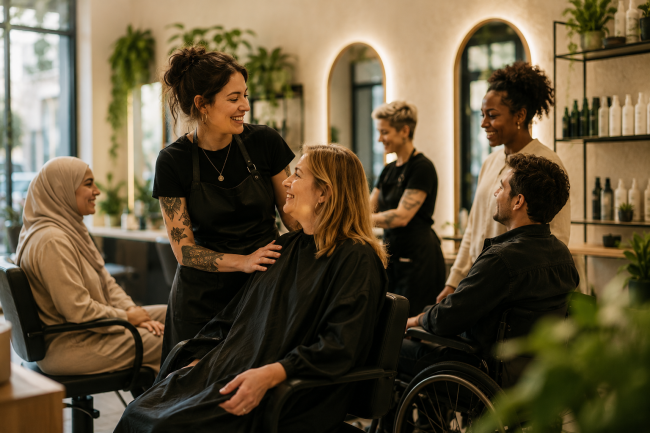
- A kind, professional culture. A team that supports each other, an owner who listens, and standards everyone is proud of.
- Care for wellbeing. Proper breaks, realistic columns, a chance to talk after a difficult client, and ergonomic equipment.
You do not need every one of these to be perfect. You need to be honest about what you offer and genuinely committed to it.
How to write a job advert that great people answer
Your advert is often the first time a candidate meets your salon. Think of it as a client consultation in reverse: you are the one being chosen.
- Lead with the person, not the list. Open with what working with you feels like and who thrives in your team.
- Show the pay. Give the wage or range, how commission works and any extras such as paid training days or a birthday off.
- Be specific about hours. Say which days, how late you open and whether there is flexibility.
- Name the training. Brand education, advanced courses, mentoring from senior staff, funded qualifications.
- Show your space. Photos of your team, your treatment rooms and your work help people picture themselves there.
- Make applying easy. A short message, a portfolio link or a trade test invitation is plenty to begin with.
Most of all, write it in your own voice. Warmth comes through, and so does the culture behind it.
Growing your own: apprentices and trainees
Training new people is one of the most rewarding ways to build a team, and one of the best ways to shape the culture you want. Apprenticeships and trainee schemes work differently in every country. In England, the minimum length of an apprenticeship is falling from 12 to eight months from August 2025, and there is funding and support to explore. In Australia, the US and elsewhere, local training bodies, colleges and state licensing schools can tell you what is available.
Apprentices stay longer when they can see their future with you. Give them a mentor, a clear training plan, regular reviews and steady progress onto the column. Celebrating milestones, from a first full head of colour to a first solo facial, builds loyalty that lasts.
Keeping the great people you have
Retention is recruitment's quieter partner, and often the more powerful one. A few habits make a big difference:
- Hold regular one to one conversations about goals, not just targets.
- Review pay and commission at set times so people know when to expect it.
- Share the business picture, so the team understands pricing and targets.
- Offer a path for those who want to be self employed later, such as renting a chair with you, so you keep their talent in the building.
- Protect breaks, and build time into the day for cleaning, notes and a cup of tea.
- Say thank you, often and specifically.
Fair pricing makes all of this affordable. If your margins feel tight, our post on why beauty business owners undercharge may help you fund the team you want.
FAQs
Why is it so hard to find hairdressers and beauty therapists?
Fewer people are entering training, many qualified professionals choose self employment, and rising costs mean fewer salons are hiring and training. It is an industry wide challenge in the UK, Australia, the US and beyond.
What do stylists and therapists want from an employer?
Clear and fair pay, ongoing training, a visible career path, flexible hours, a supportive team and genuine care for their wellbeing.
Should I include pay in my salon job advert?
Yes. Showing the wage or range and how commission works builds trust and helps the right people apply.
How can I stop my staff leaving to go self employed?
Offer growth inside your salon, such as senior or educator roles, a share of profits, or a chair rental option, so ambitious people can build their own business while staying with you.
Find your next team member
The right person for your salon is out there, looking for somewhere they can grow. We help you find staff: post your role on our jobs page and reach professionals across the industry. If you have a chair or room standing empty while you search, we can also help you fill empty rooms and chairs with a self employed professional.