Key takeaways
- Nine US states have passed laws requiring textured hair education in cosmetology schools, and UK hairdressing standards cover all hair types.
- Deeper skin tones need careful consultation, the right laser or peel choice, patch tests and strong sun protection to reduce the risk of PIH.
- Show your skills with a diverse portfolio, named training and a verified profile so every client feels confident booking.
Quick answer: Hair and beauty education is widening to include every hair texture and every skin tone. Nine US states have passed laws requiring textured hair education in cosmetology schools, UK hairdressing standards cover wavy, curly and coily hair, and treating deeper skin tones safely comes down to a thorough consultation, the right device and settings, patch tests and ongoing training. The professionals who invest in these skills now are the ones every client can trust.
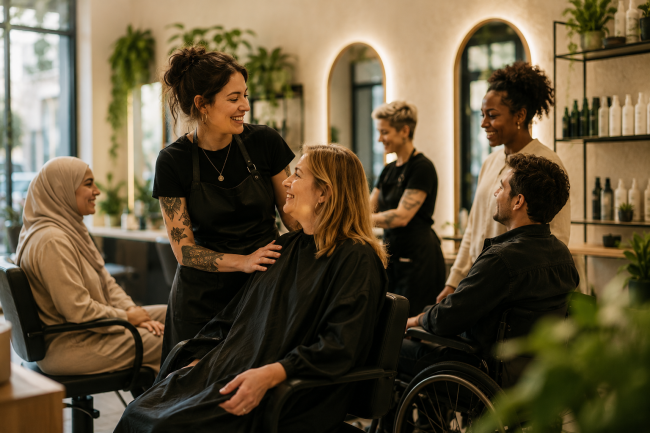
Picture a client sitting down in a new salon. They have tight coils, or deep brown skin, and they have learned to ask a quiet question before anything else happens: have you worked with hair like mine, or skin like mine, before?
For a long time, the honest answer from many newly qualified professionals was "not much". Courses often taught on one type of mannequin head, and skin training leaned on images of lighter skin. Nobody set out to leave anyone behind, but the result was a skills gap that clients noticed long before the industry did.
The good news is that the gap is closing, through new laws, updated standards and a generation of educators who want every client to feel at home in the chair. Here is where things stand, and how you can lead the way.
Where the education gap came from
Education tends to reflect the materials it is built on. In hair, that meant mannequins, textbooks and exam briefs that centred straighter hair. In skin, it meant reference images that rarely showed brown and black skin. A 2021 study of 1,123 skin condition images across six popular medical student study resources found that only 14.9% showed brown to black skin tones. If doctors in training see so few examples, it is easy to see how beauty and aesthetics training followed a similar pattern.
The Textured Education Collective, an alliance founded by Aveda, DevaCurl, L'Oréal USA and Neill Corporation under the Professional Beauty Association, says 65% of Americans with textured hair have historically been left out of cosmetology education. That is a huge number of clients, and a huge opportunity for the professionals who can serve them well.
US states that now require textured hair education
The United States has moved quickly. According to the Textured Education Collective's July 2025 announcement, these states have passed laws requiring textured hair education in cosmetology schools:
- Louisiana (2021), the first state to act
- New York (passed 2023)
- Minnesota, Connecticut and California (2024)
- Washington, Vermont and Maine (2025)
New Jersey followed when its bill requiring textured hair training for cosmetologists, barbers and hair braiders was signed into law on 12 January 2026. That brings the total to nine states.
Passing a law and seeing it in classrooms are two different moments. New York's requirement took effect on 1 September 2026. The New York Department of State says instruction on textured hair, including hair and scalp properties, care, treatments and styling, is now built into the existing 1,000 hour cosmetology course without adding to the total hours.
The CROWN Act and why it matters in the salon
Alongside education, the US has seen a wave of laws protecting natural hair at work and school. CROWN stands for Creating a Respectful and Open World for Natural Hair. The first state CROWN Act passed in California in 2019, and the Economic Policy Institute reports that 30 states and Washington DC now have a version of the law. A federal CROWN Act has been introduced in Congress but has not yet received a vote.
For professionals, the message is simple. Clients are being encouraged to wear their natural texture with pride, and they want stylists who can cut, colour, care for and style it beautifully.
The UK and beyond
In the UK, the National Occupational Standards for hairdressing, which shape qualifications and apprenticeships, were approved by government in 2021 after a review led by Habia. The standards were rewritten to be inclusive of all hair types, including wavy, curly and coily hair, with a full range of curl patterns.
The creative industries are moving too. In April 2025, the entertainment union Bectu published essential skills guidance for hair, makeup and prosthetics artists working with textured hair and darker skin tones, which Habia has endorsed. It sets out the minimum skills every artist should have and includes a guide for continuing professional development.
Rules differ from country to country, and many places have no specific requirement yet. Wherever you work, check what your local qualification framework and licensing body expect, and treat these standards as a helpful benchmark.
Treating deeper skin tones safely
Skin with more melanin is beautiful, resilient and ages well, and it also responds to heat, light and inflammation in its own way. The main thing to understand is postinflammatory hyperpigmentation (PIH): darker patches that can appear after any irritation or injury to the skin, from acne to an overly aggressive treatment.
Start with the Fitzpatrick scale
The Fitzpatrick scale groups skin into six types based on how it reacts to the sun, from type I (always burns, never tans) to type VI (deeply pigmented, never burns). It is a useful starting point for choosing settings, but it is only a starting point. Ask about how the skin heals after spots, scratches or waxing, any history of pigmentation, and what products and medication the client uses. Record it clearly on their consultation card.
Laser and IPL
Lasers target pigment, so melanin in the skin competes with melanin in the hair. A 2024 review in Clinical, Cosmetic and Investigational Dermatology describes the long pulsed 1064 nm Nd:YAG laser as the safest option for hair removal in darker skin, and notes one study where ruby laser treatment caused blistering in 14.9% of darker skinned patients compared with 5% for Nd:YAG. The same review recommends the lowest effective fluence, longer wavelengths, larger spot sizes and good cooling.
IPL is a broad spectrum light rather than a single wavelength, so always check the skin types your device is approved for and follow the manufacturer's guidance. A patch test, with enough time to see how the skin settles, is essential. Our laser hair removal treatment guide explains the treatment for clients in plain language.
Chemical peels
Peels can be wonderful for deeper skin tones when depth and strength are chosen with care. In a five year study of 473 superficial peels on skin types III to VI, published in the Journal of the American Academy of Dermatology, just 3.8% of treatments led to side effects, and all of them resolved within eight months. Type VI skin did carry higher odds of a reaction, which is a reminder to go gently.
The 2024 review supports superficial peels such as glycolic acid, started at a low strength and built up over visits. It advises extreme caution with medium depth peels and avoiding deep peels. Preparing the skin beforehand and strict sun protection afterwards both help reduce the risk of PIH. Our skin peels and chemical peels guide is a good one to share with clients.
If a client has a pigmentation condition such as melasma, or any skin concern you are unsure about, refer them to their doctor or a dermatologist. Beauty professionals do not diagnose, and a referral is part of great care.
What good training looks like
The best textured hair and skin of colour courses share a few qualities:
- Real models, not just theory. Practical hours on a range of curl patterns and skin types build genuine confidence.
- Educators with lived experience. Look for trainers who work with these clients every day and can show you their portfolio.
- Clear content. For hair: curl pattern and porosity, cutting dry and wet, protective styles, colour and lightening on textured hair. For skin: Fitzpatrick assessment, PIH prevention, device settings and aftercare.
- Insurance recognition. Check your insurer will cover you once you have completed the course.
- Ongoing learning. One course is a beginning. Techniques and devices keep moving forward.
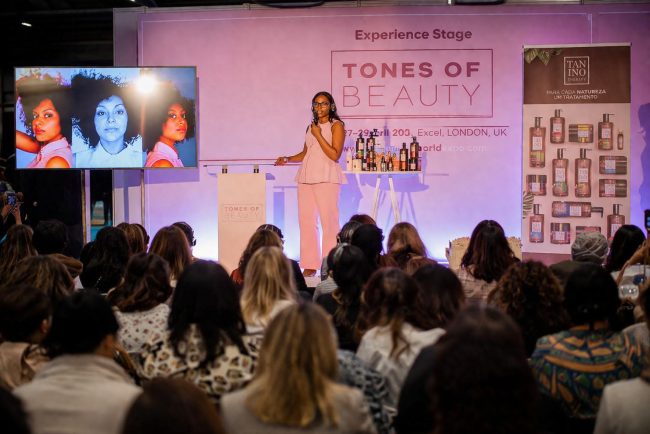
You can find industry events with textured hair and skin education on our events page, and our guide to online courses helps you choose learning that fits around your work.
How to show clients you are skilled
Clients with textured hair and deeper skin tones often do a lot of research before booking. Make it easy for them to see you are the right choice:
- Show work on a range of hair textures and skin tones in your portfolio and social media, always with consent.
- Name your training on your website and profile, including the course and the year.
- Describe your consultation process, so clients know you will ask about their hair and skin history first.
- Stock and name the products you use for textured hair and sensitive or pigmented skin.
- Use warm, welcoming language that says everyone is welcome here.
A verified profile on The Hair and Beauty Directory shows clients that your qualifications and insurance have been checked, which gives them confidence before they ever walk through your door.
FAQs
Which US states require textured hair education?
Nine states have passed laws: Louisiana, New York, Minnesota, Connecticut, California, Washington, Vermont, Maine and New Jersey. Start dates vary, so check with your state board.
Do UK hairdressers learn to work with textured hair?
Yes. The UK National Occupational Standards for hairdressing, approved in 2021, cover all hair types, including wavy, curly and coily hair. Course content and depth can vary between providers, so ask what is included.
Is laser hair removal safe for dark skin?
It can be, with the right device and an experienced practitioner. The long pulsed 1064 nm Nd:YAG laser is widely considered the safest choice for darker skin, along with careful settings, cooling and a patch test.
Can you do chemical peels on darker skin?
Yes. Superficial peels have a low complication rate in darker skin when started gently and built up gradually. Deep peels are best avoided, and sun protection afterwards is essential.
What is PIH?
Postinflammatory hyperpigmentation is darkening of the skin after irritation or injury. It is more common in deeper skin tones and is often temporary, but prevention through gentle treatment choices is the goal.
Welcome every client
Closing the skills gap is one of the most exciting things happening in our industry. Every course you take and every new texture or skin tone you master means more people walk out of your salon feeling seen and cared for. List your business for free and get a free visibility report, so the clients looking for your skills can find you, and find industry events to keep your learning growing.