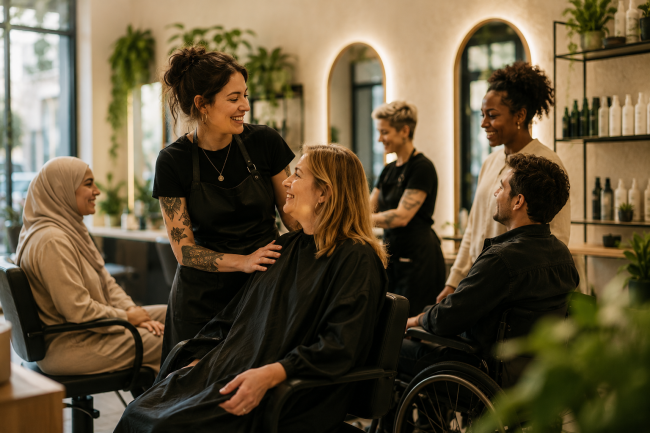

Sensory friendly and quiet appointments: simple changes that welcome more clients
Key takeaways
- Sensory friendly appointments help autistic people, people with ADHD, sensory sensitivities or anxiety, and anyone who prefers a calmer visit.
- Simple adaptations to lighting, noise, scent, touch, booking times and communication make a big difference and are mostly free or low cost.
- Ask each client what helps them, offer a silent appointment option, and describe your adaptations clearly on your profile and website.
Quick answer: Sensory friendly and quiet appointments are treatments designed to feel calmer and more predictable. They help many autistic people, people with ADHD, people with sensory sensitivities or anxiety, and anyone who simply prefers a peaceful visit. Simple changes such as softer lighting, less noise and scent, quieter booking times, clear information before the visit and the option of a silent appointment cost little and welcome more clients through your door.
For many clients, a salon visit is the most relaxing hour of their month. For others, the same visit can feel like a lot: bright lights, music, hairdryers, strong scents, chatter and the uncertainty of what happens next. Some people quietly put off appointments for months, or never book at all, because the environment feels overwhelming.
The lovely thing is that small adjustments can change that experience completely. Many professionals are already making them, and clients notice. Here is why sensory friendly and quiet appointments matter, and practical ways to offer them without a big budget.
Who benefits from sensory friendly appointments?
More people than you might expect. In the US, the CDC's latest monitoring data, published in April 2025, found that 1 in 31 eight year olds had been identified as autistic in 2022, across 16 sites. In England, a UCL study published in The Lancet Regional Health in 2023 estimated that over 1.2 million people may be autistic, with around 750,000 adults aged 20 and over likely to be undiagnosed. Many of your clients may be autistic without ever mentioning it.
Sensory friendly appointments are also helpful for:
- People with ADHD, who may find noise, waiting or long periods of sitting still difficult.
- People with anxiety, including those who feel nervous about a new treatment or a new salon.
- People with sensory sensitivities linked to migraine, chronic pain, menopause or other health conditions.
- Anyone who simply wants a quieter, more restful visit.
Every person is different. Some autistic people love a lively salon, while others need calm. The way to get it right is to ask each client what helps them, and to listen. Language matters too: many autistic people prefer "autistic person", while others prefer "person with autism", so follow each client's lead.
The rise of the silent appointment
Quiet services are growing well beyond our industry. TIME reported in November 2024 on the rise of silent services, from silent haircuts at salons to quiet rides. Lyft told TIME that around 13% of its Black and Extra Comfort customers requested a quiet ride in 2023. The same article notes that small talk makes up roughly a third of our conversations, according to a Rutgers professor who studies social networks.
For some clients, chatting is the best part of a salon visit. For others, an hour of conversation is tiring, especially at the end of a long week. Offering a silent or low chat appointment simply lets each client choose. It is not about being unfriendly. It is about letting clients relax in the way that suits them.
The easiest way to offer it is a simple tick box on your booking form or consultation card: "I would love a chat", "I would prefer a quiet appointment", or "I don't mind". You can still check comfort and explain each step, keeping communication short and clear.
Practical changes to your space
The tips shared by salon owners in Professional Beauty show how much can be done with very little. Here are the areas to think about.
Lighting
Bright overhead lights can feel harsh. Dimmable lighting, lamps or natural light create a softer setting. If a treatment needs strong light, such as lash or brow work, let the client know in advance and turn it on only when needed.
Noise
Turn music down or off for quiet appointments, and book them away from busy hairdryer times. Keep noise cancelling headphones or disposable earplugs available for clients who want them, and let clients bring their own headphones and music.
Scent
Fragrance is part of the experience for many clients but can be overwhelming for others. Ask before lighting candles or using diffusers, and offer unscented or low scent product options where you can.
Touch and comfort
Some clients are very sensitive to touch, temperature or texture. Offer a choice of blankets, warm water for cleansing, and explain before you touch. Agree a simple signal so a client can ask for a pause without having to speak.
A calm space to wait
Waiting rooms can be one of the hardest parts of a visit. Offer to meet clients at the door, take them straight to the treatment room, or let them wait in their car until you are ready.
Booking options that make it easier
Many sensory friendly changes happen before the client even arrives:
- Quiet times. Offer appointments at the start or end of the day, or when you are the only person working.
- Private or one to one slots. A quiet room or a closed door can make all the difference.
- Several ways to book. Online booking, email, phone and messaging all suit different people. Some clients find phone calls hard, so online options are especially welcome.
- Longer appointments. A little extra time removes pressure and allows breaks.
- Support people welcome. Let clients know a parent, carer, partner or friend is welcome to come with them.
Clear communication and visual guides
Uncertainty is one of the biggest sources of stress. The more a client knows before their visit, the calmer they are likely to feel. Helpful ideas include:
- Photos of your entrance, reception and treatment room on your website or social media.
- A short step by step guide to each treatment, with what the client will see, hear, feel and smell.
- Clear directions, parking information and what happens on arrival.
- A space on your consultation form where clients can share any sensory needs or preferences, at no extra charge.
During the appointment, explain each step before you start it, check understanding, and give the client easy ways to say yes, no or pause. Keep language simple and direct.
Always remember that our role is to adapt the experience, not to diagnose. If a client shares health concerns, gently signpost them to their doctor or a suitable health professional.
What does it cost?
Most sensory friendly changes are free or very low cost. Turning music down, asking about preferences, offering quiet times and adding photos to your website cost nothing. Earplugs, a few blankets, a lamp and a fidget toy or two are small investments. Dimmable bulbs or a quiet room may take a little more planning, but they also create a more relaxing space for every client.
The return can be significant. Clients who feel comfortable are more likely to rebook and to recommend you. Phorest's 2025 research found that 50% of clients want salons to personalise their experience, and offering a sensory friendly option is one of the most personal touches you can give.
Let clients know you offer it
Clients can only choose you if they know what you offer. Describe your adaptations clearly on your website, social media, booking platform and directory profile. Simple phrases help, such as "calm environment", "quiet appointments available", "flexible appointment times" or "happy to adapt lighting and music". If your team has completed autism or neurodiversity awareness training, mention it.
Ask autistic and neurodivergent clients and team members for their ideas too. They know best what makes a difference.
FAQs
What is a sensory friendly salon appointment?
It is an appointment adapted to reduce sensory overload, for example with softer lighting, less noise and scent, a quieter time slot, clear information and the option of little or no conversation.
What is a silent appointment?
A silent appointment is one where the professional keeps conversation to what is needed for the treatment, so the client can relax quietly. Many salons let clients choose this when booking.
How can I make my salon autism friendly?
Ask each client what helps them, offer quiet booking times, reduce bright light, noise and strong scent, explain each step clearly and share photos and information before the visit.
Do I have to charge more for a quiet appointment?
No. Many salons offer sensory friendly options at no extra cost. If you add extra time, you may choose to price that time as you would any longer appointment.
Small changes can open your doors to clients who have been waiting for a space that feels right. List your business for free and get a free visibility report, and describe your sensory friendly options in your profile so the right clients can find you. If you are a client looking for a calm, welcoming professional, search for qualified professionals near you.