
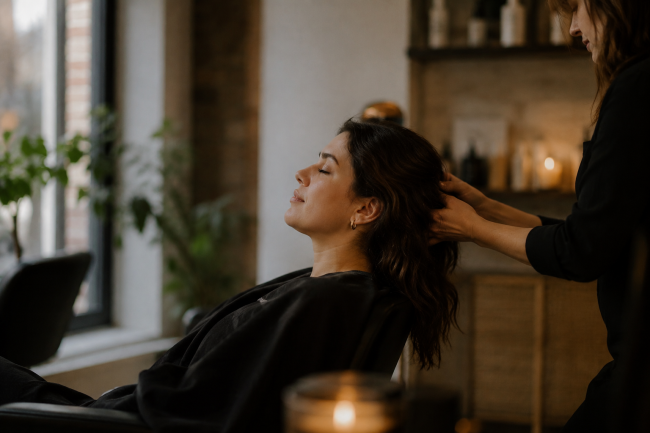
My child has nits. Do I need to tell the barber or hairdresser?
Key takeaways
- Head lice are common, spread by head to head contact and have nothing to do with clean or dirty hair.
- Letting the salon know means they can rebook you for a time after treatment, which protects everyone.
- Treat at home first, check the whole household, then book once no live lice are found.
Quick answer: Yes, it helps to tell your barber or hairdresser, and there is nothing to feel embarrassed about. Head lice are very common in children and their families, and salon teams see them regularly. Most salons will simply move the appointment to a date after treatment rather than turn you away for good. Lice spread through close head to head contact, so a quick message before you arrive gives the stylist time to plan and keeps other clients comfortable. Treat at home with a detection comb or a pharmacy lotion, check everyone you live with, and book again once no live lice are found.
Finding nits the night before a haircut can make your stomach drop. You might worry the salon will think badly of your family, or that your child will feel singled out in front of other clients. Those feelings are completely understandable.
The good news is that head lice are one of the most ordinary things a hair professional comes across. Parents ask this question all the time, often quietly and anonymously, because they are unsure of the etiquette. This guide explains what to say, what salons usually do and how to get your child booked back in with confidence.
Why honesty helps everyone
A quick, honest message to the salon is a kindness to your stylist, to the next client in the chair and to your child. Hair professionals work very close to the head, often for half an hour or more, and use combs, clips and capes that move from client to client. When they know in advance, they can plan the appointment calmly.
Telling the salon also protects your child from an awkward moment. If a stylist spots lice partway through a cut, they may need to stop and explain in front of others. A short call or message beforehand avoids all of that. You do not need to give a long explanation. Something like "I've just found head lice on my son, can we move his appointment until after we've treated it?" is plenty.
Most salon teams will thank you for letting them know. It shows you respect their work and their other clients, and it builds the kind of trust that makes every future visit easier.
Salons usually rebook rather than refuse
Many parents fear they will be turned away and judged. In practice, the most common response is a simple rebooking. Some local health guidance for hairdressers is clear that a person with head lice is not banned from using a salon, and suggests asking the client to reschedule instead.
Every salon sets its own policy, so it is worth asking when you call. Some will happily book you in for a set number of days after your first treatment. Others will ask you to wait until you have finished the full course and checked that no live lice remain. A few salons offer lice removal as a dedicated service, though this is less common and is separate from a normal haircut.
If you are unsure what your salon prefers, just ask. A good salon will explain its approach kindly and help you find a new date that works.
Treat first, then book
Head lice can be treated at home, and you usually do not need to see a doctor. There are two main approaches.
Wet combing uses ordinary shampoo, plenty of conditioner and a fine toothed detection comb. You comb the whole head from roots to ends, section by section. This takes about 10 minutes for short hair and 20 to 30 minutes for long, curly or textured hair. It is repeated on days 1, 5, 9 and 13 to catch any newly hatched lice, with a final check on day 17.
Medicated lotions and sprays from a pharmacy or supermarket are the other option. They usually work within a day, and some need a second application a week later. Always read the pack, as some products are not suitable for very young children or during pregnancy. A pharmacist can help you choose.
Check everyone you live with and treat anyone who has live lice on the same day. Once your checks show no live lice, you are ready to rebook.
How head lice actually spread
Head lice are small insects, up to around 3mm long. They cannot fly, jump or swim. They move by crawling from one head of hair to another during close contact, which is why they are so common among children who play, learn and cuddle up together.
Lice survive only on people, and once away from the hair they usually die within a day or so. Spreading through hats, combs or pillows is considered unlikely, and you do not need to boil wash bedding or clothing.
It is also worth knowing that the only sure sign of an active case is finding a live louse. Nits are the empty egg cases left behind, and they can stay stuck to the hair for a while after treatment has worked. If you only find old nits after treatment, mention this to the salon so they understand the situation.
No shame, ever
Head lice are not caused by dirty hair, and they do not prefer clean or unwashed hair either. Any child can pick them up, from any family, at any time. Children with head lice are not usually kept off school, which shows just how ordinary this is.
If your child feels embarrassed, reassure them that lots of their friends will have had head lice at some point too. Keep the conversation light and matter of fact. When you speak to the salon, you can do the same. There is no need to apologise or explain how it happened.
Hair professionals see head lice regularly. For them, it is simply part of caring for hair, and a well run salon will treat your family with the same warmth whether you are calling about lice, a fringe trim or a full restyle.
What salons do to keep tools clean
Salons already clean and disinfect their tools between every client as standard practice, and that routine is designed to keep everyone safe. When a salon knows a client has had head lice, it may add a few extra steps.
Typical guidance for hairdressers includes washing towels, capes and other washable fabrics in hot water with detergent, cleaning combs and other equipment thoroughly between clients, and sweeping up all cut hair, bagging it and placing it in the bin. Many salons also keep information leaflets to hand for parents.
These steps are about care and professionalism, not judgement. They are the same reason a stylist will often ask a few questions about your hair and scalp before they start. A salon that takes hygiene seriously is a salon that takes care of you.
FAQs
Can a hairdresser cut hair with nits?
Some will, especially if treatment is complete and only old egg cases remain, while others prefer to wait. Policies vary from salon to salon. The simplest thing is to explain the situation when you book and ask what they would like you to do.
How long after treating head lice can my child get a haircut?
Many salons are happy to see your child once treatment is complete and checks show no live lice. If you used wet combing, that usually means after the final check on day 17. Ask your salon what timing it prefers.
Should I tell the salon if I only found nits and no lice?
Yes, it is still helpful. Empty egg cases can stay in the hair after treatment has worked, and the salon may be happy to go ahead. Letting them know means they understand what they are seeing and nobody is caught by surprise.
Do barbers and hairdressers check for head lice?
Hair professionals often notice lice while working, because they look closely at the hair and scalp. If they find lice, they will usually pause the appointment discreetly and suggest rebooking after treatment. Telling them in advance avoids this.
Can I catch head lice at the hairdresser?
It is unlikely. Head lice spread mainly through close head to head contact, and salons clean their tools and wash their fabrics between clients. Letting the salon know about an active case is one more step that keeps everyone comfortable.
Book with confidence
A short, honest message is all it takes, and your salon will almost always meet it with kindness and a new date. Head lice are a normal part of family life, and hair professionals know that better than anyone. When you are ready to book, choosing a verified professional on the directory means their qualifications and insurance have been checked, so you can relax knowing your child is in caring, capable hands.

More from Helen Ward
-
 Helpful information (clients) Your first spa day: what to wear, what happens and what to expect
Read more
-
 Helpful information (clients) Why is my hair or skin changing? Weight loss injections, stress and hormones explained
Read more
-
 Helpful information (clients) Your wedding beauty timeline: what to book 12 months, 6 months, 6 weeks and 1 week before
Read more