
Treatment Provider
At In Sensu Ltd
Read More >>
32 results for Chemical Exfoliation (Peels)
Microdermabrasion is a mechanical exfoliation treatment that gently buffs away the outermost layer of dead skin cells to reveal fresher, smoother skin beneath. It is usually carried out in two ways: a crystal system that sprays fine particles across the skin while vacuuming them away, or a diamond-tipped wand that abrades the surface. Both are non-invasive and work only on the very top layers, so it is very different from deeper treatments such as microneedling or medical dermabrasion. People often choose it to improve skin texture and radiance, soften the look of dull or congested skin, and help skincare absorb more effectively. It is best thought of as a surface polish rather than a cure for skin conditions, and it will not remove deep scars, wrinkles or pigmentation on its own. Results are typically subtle and cumulative, so a short course spaced a few weeks apart usually gives a more noticeable, longer-lasting glow than a single session. It suits many skin types when the skin barrier is healthy and intact, and a good practitioner will tailor the intensity, suction and number of passes to your skin's tolerance and your goals.
In most cases, preparation is simple, but it does matter for a comfortable, even result. Stop using strong actives such as retinoids, AHAs, BHAs, glycolic acids and prescription exfoliants for a few days beforehand, as these thin and sensitise the surface. Avoid waxing, electrolysis, injectables, chemical peels, laser and sunbeds or heavy sun exposure in the week before your appointment, and never come in with sunburnt, broken or irritated skin. Arrive with a clean, product-free face if you can, and skip fake tan, which can be buffed away unevenly. Tell your practitioner about any medication, recent treatments and skin concerns during consultation, and flag anything like active acne, cold sores, rosacea or a history of easily scarring skin. If you are on Roaccutane or blood thinners, mention this early, as it typically means postponing. Staying hydrated and moisturising well in the days before can help your skin tolerate the exfoliation and recover more smoothly.
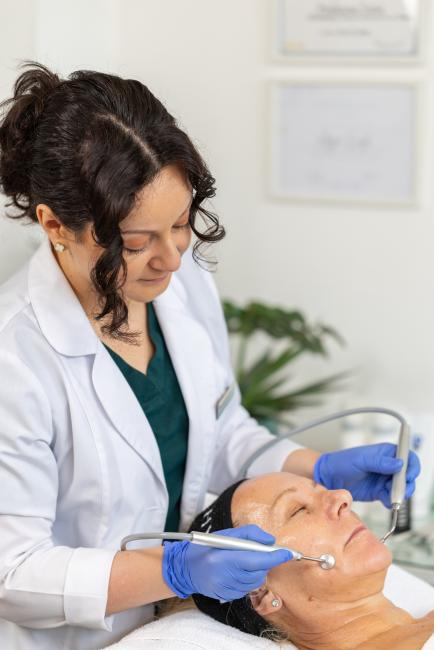
A session usually starts with a consultation and skin cleanse, followed by the treatment itself, which most people find quick and comfortable. Your practitioner moves either a crystal-spraying handpiece or a diamond-tipped wand across the skin in steady passes, and you will feel a mild gritty scratching alongside a vacuum-like suction that tugs gently at the surface. The intensity, suction strength and number of passes are adjusted to your skin, so speak up if anything feels too strong. The face typically takes around twenty to thirty minutes, and sensitive or bony areas can feel slightly more intense. There is no numbing cream and the treatment should never break the skin or draw blood, as it works only on the surface layers. Afterwards your skin may look pink or flushed and feel a little tight or warm, rather like mild windburn. Your practitioner will usually finish with a soothing serum, moisturiser and SPF, and talk you through aftercare before you leave.
Aftercare focuses on protecting a freshly exfoliated, temporarily more delicate surface. For the first couple of days, keep to gentle, fragrance-free cleansing and moisturising, and hold off on strong actives such as retinoids, AHAs, glycolics, vitamin C and scrubs for around seventy-two hours so the barrier can settle. Daily broad-spectrum SPF is essential, as newly exposed skin is more vulnerable to UV and pigmentation; try to stay out of direct sun and avoid sunbeds. Skip heat-based activities such as saunas, steam rooms, hot yoga and sweaty workouts for a day or two, along with swimming pools, as chlorine can sting. Leave makeup off for around twelve hours if you can, and choose gentle mineral formulas when you restart. Mild redness, tightness, dryness or light flaking is normal as the skin renews, so keep moisturising and resist picking. Avoid other facials, waxing, peels and injectables for about a week, and drink plenty of water to support recovery.
Microdermabrasion is a surface treatment, so its safety rests on healthy, intact skin and a competent practitioner who works at the right intensity. It should only be carried out on skin with an unbroken barrier, never over cuts, sunburn, active breakouts, cold sores, weeping eczema or infected areas, as buffing these can spread infection or damage the skin. A good practitioner assesses your skin type and history first, adjusts suction and passes to your tolerance, and stops if the skin becomes overly red or sensitive. Hygiene matters: diamond tips and crystal systems must be properly cleaned and, where relevant, single-use consumables and fresh crystals used between clients. The treatment should never draw blood, because it works only on superficial layers; bleeding suggests it has been taken too deep. Check that your practitioner is trained, insured and works in a clean, professional setting. If you have sensitive, thin or reactive skin, a patch or lower-intensity first session is sensible.
Although microdermabrasion is low-risk, several medical factors mean it should be delayed or avoided, so an honest consultation matters. It is generally not suitable if you use oral or topical Roaccutane (isotretinoin), which thins and fragilises the skin, and many practitioners ask you to wait around six months after stopping. Blood thinners, easily bruised or fragile skin, active or severe acne, rosacea, eczema, psoriasis flares, cold sores, and any skin infection are also reasons to postpone. Conditions such as diabetes, poor wound healing, a history of keloid or hypertrophic scarring, or reduced skin sensation warrant caution and often medical advice first. Undiagnosed or changing moles, lesions or suspected skin cancer should be checked by a GP or dermatologist before any treatment. Pregnancy is not an absolute barrier for surface exfoliation, but tell your practitioner so they can adapt. If you are unsure whether a medication or condition affects you, speak to your GP or a suitably qualified practitioner before booking.
A formal allergy patch test is not usually required for microdermabrasion, because it is mechanical exfoliation rather than a chemical or dye-based treatment, and reactions to the crystals are uncommon. What genuinely reduces risk is a thorough pre-treatment consultation and skin assessment: reviewing your medical history, medications such as Roaccutane and blood thinners, skin conditions, recent treatments and sun exposure, and checking the skin barrier is intact. For sensitive, reactive or first-time skin, a small test area or a gentler introductory session at lower intensity is a sensible way to gauge tolerance before treating the whole face. This consultation-first approach protects you and supports the practitioner's duty of care, as skipping proper screening can leave an insured practitioner found at fault if a foreseeable problem arises. If any product used alongside the treatment could cause sensitivity, ask about testing it first.
Be cautious if a practitioner is willing to treat broken, sunburnt, infected or actively breaking-out skin, or does not ask about your medical history, medications or recent treatments. Numbing cream should not be needed for standard microdermabrasion, and the skin should never bleed; pinpoint bleeding or a treatment taken deep enough to draw blood is a warning sign that it is being pushed beyond a surface procedure. Reused or visibly dirty diamond tips, no attention to cleaning between clients, or shared crystals raise real hygiene concerns. Other warning signs include pressure to buy long courses without assessing your skin, overblown promises to remove deep scars, wrinkles or pigmentation, no aftercare advice, and no insurance or training when asked. If your skin is left raw, blistered or persistently sore, that is not normal.
Good practice starts with a proper consultation: the practitioner reviews your skin type, history, medications and goals, and sets honest expectations about what microdermabrasion can and cannot achieve. They work in a clean, professional environment, keep diamond tips and equipment properly cleaned, and use fresh consumables and crystals where relevant. Intensity, suction and the number of passes are tailored to your skin and adjusted if it becomes too red or sensitive, and they check in with you throughout. They confirm the skin barrier is healthy before starting, never take the treatment deep enough to break the skin, and finish with soothing products and SPF. A good practitioner is trained, insured and happy to answer questions, gives clear written aftercare, recommends a sensible course rather than overselling, and advises seeing a GP where a medical issue or suspicious skin lesion needs checking first.
Most people find microdermabrasion comfortable and describe it as a mild, gritty scratching combined with a vacuum-like suction that gently pulls at the skin as the handpiece passes over. It is often likened to a cat's tongue or light sandpaper, and the suction can feel a little unusual around the eyes, nose and jawline, where skin is thinner or sits over bone. There is no numbing cream and it should not be painful; if any area feels too strong, the intensity and suction can be dialled down. Afterwards the skin usually feels tight, warm and slightly tender, rather like mild windburn, and may look pink for a few hours. Sharp pain or any bleeding is not expected and means the treatment is too aggressive.
Microdermabrasion is known for having little to no downtime, which is part of its appeal. Most people notice some pinkness, warmth and a tight or slightly sensitive feeling for a few hours, sometimes up to a day, and many return to normal activities straight away. Over the following days you may see mild dryness or light flaking as the surface renews, which typically settles by itself. More noticeable redness or sensitivity can occur after a firmer treatment or on more reactive skin. If redness, soreness or swelling lasts beyond a couple of days, or the skin feels broken or blistered, contact your practitioner or a GP, as this is not the usual experience.
Microdermabrasion gives an immediate freshness and smoother texture, though the fuller benefit builds gradually as regular exfoliation encourages surface renewal. A single session can leave skin looking brighter and feeling softer, but effects are typically subtle and temporary, so many people have a short course spaced around one to two weeks apart, followed by occasional maintenance sessions every few weeks or monthly. Results depend on your skin, age and lifestyle, and the intensity can be tailored over a course as your skin adjusts. To protect and extend the benefits, keep up daily SPF, moisturise well, stay hydrated and use a gentle, consistent skincare routine, reintroducing actives like retinoids and acids slowly once the skin has settled. It works best as a complement to good everyday skincare rather than a one-off fix, and it will not replace treatments aimed at deeper concerns such as significant scarring, deep lines or stubborn pigmentation.
Waxing removes unwanted hair from the root using warm or hot wax, giving smooth skin that typically lasts longer than shaving because the hair has to regrow fully before it reappears. It can be used on the legs, arms, underarms, face (such as the upper lip, chin and brows), back, chest and the bikini or intimate area, with a Brazilian or Hollywood removing most or all of the pubic hair. Practitioners usually work with either strip wax, where fabric or paper strips lift the wax and hair away, or hot (peelable) wax that sets and is removed without strips, which many find gentler for sensitive and intimate areas. Results build over time, and with regular appointments hair often grows back finer and more sparsely for some people, though this varies. Waxing is a well-established beauty treatment rather than a medical one, but it is not suitable for everyone or for every stage of skin health. Some skin conditions, medications and recent treatments make it unsafe, so a good therapist will check your suitability first. Choosing a trained, insured therapist working in clean, hygienic conditions makes a real difference to both your comfort and your safety, and to the quality of the finish you can expect.
Let the hair grow to roughly a quarter of an inch, or about the length of a grain of rice, so the wax can grip it properly; if it is too short it will not lift cleanly, and very long hair can be trimmed first. In most cases it helps to gently exfoliate and moisturise in the days beforehand, but stop moisturising on the day itself and arrive with clean, product-free skin, as oils and creams stop wax adhering. Avoid sunbeds, sunbathing and fake tan in the days before, and do not book waxing over sunburnt, broken or freshly treated skin. Tell your therapist in advance about any medication, skin conditions or recent treatments such as chemical peels, laser or microdermabrasion. Many people find it more comfortable to avoid caffeine and alcohol beforehand and, where relevant, to book outside the most sensitive days of their menstrual cycle. A warm shower beforehand can soften the follicles.
Your therapist will typically start with a short consultation about your health, medication and any previous reactions, then cleanse the area. Warm wax is applied in the direction of hair growth using a spatula, and either a strip is pressed on and removed, or hot wax is left to set slightly and then flicked off, both taken away against the direction of growth to lift the hair from the root. You will feel a quick pull with each section, which passes almost immediately; the therapist often applies gentle pressure straight afterwards to ease it. They should use a fresh spatula each time rather than double-dipping into the pot, and work in an unhurried, methodical way. Afterwards they may tweeze any stray hairs, remove residue and apply a soothing lotion. A full leg or intimate wax takes longer than a lip or brow. A good therapist will keep checking you are comfortable and will explain what they are doing throughout.
For the first 24 to 48 hours the follicles are open and the skin is more sensitive, so treat the area gently. Keep to lukewarm showers rather than hot baths, saunas or steam rooms, and avoid swimming pools for a day or so. Skip perfumed products, deodorant on freshly waxed underarms, make-up over the area, and sunbeds, sunbathing and fake tan while the skin settles. Avoid heavy exercise and tight, non-breathable clothing straight after an intimate wax, as heat, friction and sweat can cause irritation. Wear loose, clean cotton where possible. If the skin feels tender, a cool compress or a plain, fragrance-free soothing gel such as aloe vera can help. From two to three days afterwards, begin gently exfoliating a few times a week and keep the skin moisturised, which helps prevent ingrown hairs. Try not to touch or pick at the area with unwashed hands.
Hygiene is central to safe waxing. Your therapist should wash and sanitise their hands, work in a clean environment, use fresh couch roll and, crucially, never double-dip the spatula back into the wax pot after it has touched your skin, as this can spread bacteria. Choose someone who is trained in waxing and holds professional insurance, and who takes a proper health and medication history before starting rather than pressing ahead regardless. Wax should be tested for temperature so it is comfortably warm, not hot enough to burn. Waxing should only be done on healthy, intact skin, so it should be avoided over cuts, sunburn, active eczema, psoriasis or rosacea flare-ups, moles, warts, varicose veins and recently treated or peeling skin. If anything feels too hot or the environment looks unclean, it is reasonable to stop and ask questions. A patch test may be offered, especially before intimate or sensitive-area waxing.
Some medications and conditions make waxing unsafe because they thin, fragile or over-sensitise the skin, raising the risk of tearing, lifting, bruising or burns. Isotretinoin (Roaccutane) is a key one: skin usually should not be waxed while taking it and for a period after stopping, with around six months commonly advised, though you should check with your prescriber. Topical retinoids and acids such as tretinoin, retinol, adapalene and glycolic acid should be paused on the area beforehand, as should recent chemical peels, laser, IPL or microdermabrasion. Blood-thinning medication, some antibiotics, diabetes, circulatory problems, autoimmune conditions and pregnancy all warrant caution and, where appropriate, a word with your GP first. Waxing is not a treatment for any skin or medical condition and makes no health claims. Always tell your therapist about your full medical history and any medicines, prescribed or over the counter, so they can judge whether it is safe or whether to postpone.
A skin patch test is not routine for every wax, but a thorough consultation and health check before your first appointment matters just as much. Your therapist should ask about medication, skin conditions, allergies (including to ingredients such as rosin or colophony in some waxes), pregnancy, hormonal treatments and recent skin procedures, and inspect the area to confirm the skin is healthy and intact. A small patch test is sensibly offered if you have sensitive or reactive skin, a history of reactions, are pregnant or on hormonal medication, or are trying a new wax type. This protects you from an unexpected reaction and reflects good, insured practice: skipping these checks can leave a therapist at fault if something goes wrong. Sensitivities can also develop over time, so the history should be revisited at repeat visits, not assumed unchanged.
Be cautious if the therapist double-dips the same spatula back into the wax pot, reuses strips between clients, or works in a visibly unclean space without fresh couch roll or clean hands. It is a warning sign if no one asks about your medication, skin conditions or medical history, or if they wax over sunburn, cuts, active eczema or psoriasis, moles or recently peeled skin without hesitation. Wax that feels too hot, being rushed or pressured, dismissing your discomfort, or an unwillingness to answer questions about training, insurance or hygiene are all reasons to pause. Guarantees that waxing will permanently remove hair, or pushing on despite your telling them you take Roaccutane or blood thinners, should also give you real cause for concern.
Good practice looks like a clean, tidy room, freshly sanitised hands, disposable couch roll and a spatula that is used once and never dipped back into the pot. A reassuring therapist takes a proper health and medication history, checks your skin is suitable, tests the wax temperature and explains what they are doing as they go. They hold recognised waxing training and up-to-date professional insurance, are happy to answer questions, and will honestly postpone or decline if waxing is not safe for you that day. They talk you through realistic expectations, tailor the approach to your skin's sensitivity and the area being treated, and send you away with clear aftercare advice. Feeling comfortable to speak up and being checked on throughout are signs of a considerate, professional service.
Waxing involves a quick, sharp pulling sensation as each section of hair is lifted from the root, followed by a brief sting or warmth that usually fades within seconds, eased by the gentle pressure a therapist applies straight after. The warm wax itself feels comfortably hot but should never burn. Sensitive and intimate areas, coarser hair and a first-ever wax tend to feel more intense, while regular waxing often becomes more tolerable as the hair grows back finer. You may feel some tenderness, tingling or warmth for a short while afterwards, and small raised bumps around the follicles are common and normal. Skin can be more sensitive around your menstrual cycle. Tell your therapist at any point if something is too painful.
There is usually little to no real downtime. Most people notice some redness, warmth and small raised bumps around the follicles straight after, particularly on first-time or sensitive-area waxes, and this typically settles within a few hours to a day. More sensitive or intimate areas can stay slightly pink or tender for a little longer. You can generally return to normal activities right away, though it is sensible to avoid heat, heavy sweating and friction for the first day. If redness, swelling or discomfort is getting worse rather than better after a couple of days, or you see signs of infection, seek advice from your therapist or a pharmacist or GP.
Smooth results from waxing typically last around three to six weeks, depending on your natural hair growth cycle and the area treated. Because the hair is removed at the root, regrowth is softer and less stubbly than after shaving, and with regular waxing every four to six weeks many people find growth becomes gradually finer and more sparse, though this varies from person to person and is not guaranteed to be permanent. For the best results, let the hair reach a suitable length between appointments rather than shaving in between, which resets the cycle. Regular gentle exfoliation two to three times a week and daily moisturising between visits help keep skin smooth and reduce ingrown hairs. Booking on a consistent schedule keeps regrowth even and often makes each session more comfortable. Your therapist can tailor the frequency and areas to your hair type, skin sensitivity and how quickly you regrow.
Threading is a precise, chemical-free method of removing unwanted hair, most often used to shape the eyebrows and to tidy the upper lip, chin, cheeks and sides of the face. A trained technician twists a length of fine cotton thread and rolls it across the skin, catching individual hairs and lifting them cleanly from the follicle in neat rows. Because it removes hair at the root, results typically last longer than shaving, and because no wax or heat touches the skin, many people find it gentler on sensitive or reactive areas. It is one of the lower-risk beauty treatments, but the eye and brow area is delicate, so skill, hygiene and honest advice about your skin still matter. Threading suits most skin types and can be tailored to your preference, from a subtle clean-up to a defined reshape. It does not treat any skin condition and is purely a hair-removal and grooming service. A good practitioner will talk through the shape you want, check that your skin is healthy and intact, and work with fresh thread to keep the treatment clean and comfortable.
In most cases little preparation is needed. If you are reshaping your brows, letting the hair grow for a couple of weeks beforehand gives the technician more to work with and a better result. Arrive with a clean, make-up-free face where possible, as this keeps the area hygienic and lets the practitioner see your natural hair pattern. It helps to bring a reference photo or to be ready to describe the shape and thickness you would like, so the outcome matches your expectations. Avoid strong exfoliants, retinoids, acids or sunbeds and heavy sun exposure for a day or two beforehand, as these can leave skin more sensitive or fragile. If you have recently had a facial, peel or laser in the same area, mention this. Tell your technician about any skin conditions, medicines or recent treatments at the start, so they can adjust their approach or advise waiting if your skin is not suitable that day.
You will usually sit or lie back while the technician holds the skin taut with one hand and works a twisted cotton thread across the area with the other. The thread rolls over the skin and lifts several hairs at a time directly from the root, following the shape you have agreed together. You may be asked to hold your own skin or eyelid gently in place to help keep the area steady and the lines clean. Brow shaping typically takes only a few minutes; larger areas such as the full face take a little longer. A skilled practitioner works methodically, checking the shape and symmetry as they go and pausing to show you progress if you wish. The sensation is a quick, repeated light scratching or plucking feeling rather than the pull of wax. Fresh thread should be used for you, and the technician should have clean hands and a tidy workspace throughout.
Threading has minimal aftercare, but the follicles are briefly open afterwards, so a little care helps prevent irritation. Some redness or small pink bumps are normal and typically settle within a few hours to a day. Avoid touching or rubbing the area with unwashed hands, and try to keep heavy make-up off freshly threaded skin for the rest of the day to lower the risk of blocked pores or infection. A cool compress or a simple soothing gel such as aloe vera can calm any warmth, though some people prefer to leave the skin bare. For around 24 hours it is sensible to avoid saunas, steam rooms, hot workouts, swimming pools, sunbeds and strong sun, as heat, sweat and UV can aggravate sensitive skin. Hold off on exfoliating acids and retinoids on the area for a day or so. If you notice unusual swelling, spreading redness or signs of infection, seek advice from a pharmacist or GP.
Threading is low-risk, but good hygiene is what keeps it safe, because the thread runs directly across the skin and briefly opens the follicles. Fresh, clean cotton thread should be used for each client and never reused between people, and the technician should have clean hands and a clean working area. Choose a practitioner who is trained and experienced, ideally insured, and who works in a clean, professional setting. A careful technician will check that your skin is healthy and intact before starting and will not thread over broken skin, active acne, cold sores, sunburn, eczema or any inflamed or infected area, as this can spread bacteria or worsen the skin. The eye and brow area is delicate, so precision and steady skin tension matter to avoid nicks or catching the skin. If anything about the cleanliness or the practitioner's confidence feels off, it is reasonable to pause and ask questions before going ahead.
Threading is a cosmetic hair-removal service and is not a substitute for medical care, but a few health factors are worth flagging to your technician. If you take the acne medicine isotretinoin (Roaccutane) or have recently finished it, your skin can be thin and fragile and may lift or tear easily, so many practitioners will decline threading or advise waiting; guidance in this area is debated, so check with your prescriber or a GP first. Let your technician know if you use retinoids or acid exfoliants, take blood thinners or steroids, or have a skin condition such as eczema, psoriasis, rosacea or very reactive skin, as any of these can make skin more sensitive or prone to marking. Recent facials, peels, laser or microneedling in the same area also mean the skin may need time to recover. If you are unsure whether threading is suitable for your skin or medication, speak to a GP or your prescribing clinician before booking.
A skin patch test is not standard for threading, because it uses only cotton thread with no dyes, chemicals or products that commonly trigger allergy. What matters instead is a proper check before the technician starts. Expect a brief consultation covering your skin health, any medicines such as isotretinoin or blood thinners, recent treatments in the area, and the shape you want. The practitioner should look at the skin to confirm it is intact and free of active acne, cold sores, sunburn, eczema or infection before threading over it. These checks reduce the risk of irritation, marking or spreading bacteria, and they protect you and the practitioner if anything were later disputed. Being open about your history at this stage is the best safeguard; if in doubt about a medicine or skin condition, a GP or prescriber can advise whether to proceed.
Be cautious if the thread looks reused between clients, if the technician does not appear to take a fresh length for you, or if their hands and workspace are visibly unclean. It is a warning sign if no one asks about your skin, medicines or recent treatments, or if a practitioner is willing to thread over active acne, cold sores, sunburn, broken or infected skin. Rushed, heavy-handed work that repeatedly catches or nicks the delicate skin around the eyes is a concern, as is a practitioner who dismisses your questions about hygiene or shape, or who cannot explain their training or insurance. Pushy upselling, no consultation and a dirty or chaotic setting are all good reasons to pause and reconsider.
Good practice starts with a clean, tidy setting and a technician with clean hands who takes a fresh length of cotton thread for you. Look for someone trained and experienced who is happy to explain their approach and show they are insured. A good practitioner asks about your skin, medicines and recent treatments, checks the skin is healthy before starting, and talks through the shape you want rather than assuming. They work with steady, controlled tension, check symmetry as they go and pause to let you see progress. Clear, honest aftercare advice and a willingness to say no or reschedule if your skin is not suitable that day are strong signs you are in careful, professional hands.
Most people describe threading as a quick series of light scratching or plucking sensations as each row of hair lifts from the root, rather than the stronger tug of waxing. There can be a brief sting on more sensitive spots such as the upper lip or close to the inner brow, and your eyes may water a little around the brows, which is a normal reflex rather than a sign of harm. First-timers often feel it more, and skin can be more tender around the time of your period. Any discomfort is usually short-lived and eases as soon as the area is finished, often leaving a mild warm or tingly feeling for a short while.
Threading needs little to no downtime and most people return to their day straightaway. It is normal to see some redness, mild tenderness or a few tiny raised bumps immediately afterwards, particularly if it is your first time or the area is sensitive, and this typically fades within a few hours and often within a day. Because the treatment is quick and non-invasive, there is usually no lasting mark. If your skin runs reactive, you may prefer to schedule threading a day or two before an event rather than immediately before, so any short-lived redness has time to settle.
Because threading removes hair from the root, results typically last longer than shaving, commonly around two to four weeks, though this varies with your natural hair growth and cycle. As the hair grows back it tends to feel finer and softer than stubble, and regular threading can make regrowth look more even over time. Most people settle into a rhythm of every three to four weeks for brows to keep a defined shape, or as needed for facial areas. Between visits, avoid over-plucking at home, which can disrupt the shape your technician has created. The intensity of the result is easily tailored, from a light tidy that keeps your natural brow to a more defined reshape, so it is worth discussing your preference each time, especially if your ideal shape changes. Gentle daily brushing and a light moisturiser help keep the brows and surrounding skin in good condition between appointments.
HydraFacial is a branded, non-invasive facial that combines gentle mechanical exfoliation with the infusion of hydrating and antioxidant serums. It uses a patented handpiece with a spiral tip and controlled suction, sometimes described as hydradermabrasion, to lift away dead skin cells, dislodge debris from pores and deliver serums to the surface in one pass. A typical treatment cleanses, lightly exfoliates, extracts and then hydrates, and can be tailored with different serums or add-ons such as booster ampoules or LED light to suit your skin type and goals. It is generally considered a low-risk, comfortable treatment with little or no downtime, which makes it popular before events. It is best thought of as a surface-level radiance and hydration treatment rather than a medical procedure, so it will not treat deeper concerns such as significant acne scarring, pigment or lines in the way clinical treatments might. Because HydraFacial is a trademarked system, it should be carried out on genuine equipment by a trained practitioner. A brief consultation beforehand helps confirm the treatment is suitable for your skin and that you have no contraindications.
A short consultation and honest skin history come first, so mention any medication, recent treatments, allergies or skin conditions. In most cases you should pause exfoliating acids such as glycolic, salicylic and retinoids for a few days beforehand, and stop prescription retinoids for around a week, because these can leave skin more reactive. Avoid waxing, other hair removal, chemical peels or facials for roughly a week before, and leave a gap after injectables or laser as your practitioner advises. If you are prone to cold sores, tell your practitioner in advance, as treatment can sometimes trigger an outbreak and antiviral cover may be suggested. Come with clean skin where possible and without heavy make-up. Avoid sunburn or a fresh tan on the day. If you have a special event, book a few days ahead rather than the day before, so any temporary redness has time to settle and you can see how your skin responds.
Your practitioner will usually start by reviewing your skin and confirming your goals. The treatment itself is typically relaxing and takes around thirty to sixty minutes depending on any add-ons. The handpiece is moved across the skin in stages, generally cleansing and light exfoliation first, then a gentle acid step to loosen debris, followed by suction-assisted extraction of pores, and finally the infusion of hydrating and antioxidant serums. Many people describe the sensation as a cool, slightly ticklish massage with a mild tugging where suction is applied, particularly around the nose. It should not be painful and should not break the skin. Serums or boosters may be chosen to suit concerns such as dryness, dullness or congestion, and some clinics add LED light or other steps. You can usually see and feel a difference straight away, with skin looking cleaner, plumper and more radiant. Let your practitioner know at any point if anything feels uncomfortable.
HydraFacial needs little special aftercare, which is part of its appeal. Keep the skin simple for the first day or so and follow any advice your practitioner gives. It is sensible to avoid direct sun, saunas, steam rooms, hot yoga, swimming and vigorous exercise for around forty-eight hours, as heat and sweat can irritate freshly treated skin. Apply a broad-spectrum SPF daily, as your skin may be a little more sun-sensitive. Hold off on exfoliating acids, retinoids and gritty scrubs for about a week, and avoid other facials, waxing, peels or laser in the same area for a similar period. Many clinics suggest waiting around twelve hours before make-up so the skin can settle, though light mineral make-up is often fine sooner. Try not to pick or rub the area, keep well hydrated, and stick to a gentle, nourishing routine. If any redness, tightness or unexpected reaction persists beyond a couple of days, contact your practitioner for advice.
Although HydraFacial is low-risk, it is still a skin treatment and should be carried out by a trained, insured practitioner using genuine equipment and single-use tips, with the device and surfaces properly cleaned between clients to reduce any infection risk. A consultation and skin assessment should always come first, so the treatment and any serums can be matched to your skin and contraindications ruled out. Good practitioners work at a comfortable, superficial level; the treatment should feel gentle and must not break the skin or cause pain. Be wary of anyone who cannot show training or insurance, skips a consultation, or promises to treat medical conditions such as significant acne, deep scarring or pigment, as this is not what a HydraFacial is designed to do. If you have a complex skin condition, are taking oral acne medication, or are unsure whether treatment is right for you, seek advice from a GP or suitably qualified skin professional before booking. Honest, realistic expectations are part of safe practice.
HydraFacial is not suitable for everyone, so an honest medical and skin history matters. It is generally avoided over active or inflamed acne, open or broken skin, sunburn, active cold sores, rashes, rosacea flare-ups and skin infections. Practitioners commonly ask you to wait around six months after finishing oral isotretinoin, such as Roaccutane, because the skin can be fragile and more reactive, and to confirm with your prescriber if in doubt. Certain conditions, including autoimmune diseases, uncontrolled diabetes, some circulatory conditions or photosensitising medication, may mean treatment is postponed or that written GP approval is sought first. Many clinics prefer to avoid treatment during pregnancy as a precaution, so tell your practitioner if you are pregnant or breastfeeding and follow their advice. If you have recently had injectables, peels, laser or other facial treatments, allow the recommended gap. When there is any medical uncertainty, the safe course is to check with your GP or a suitably qualified healthcare professional before going ahead.
A skin patch test is not usually required for HydraFacial, because it does not rely on dyes or reactive colourants in the way that tinting or henna does. The more important safeguard is a proper consultation and skin assessment before your first treatment, where the practitioner reviews your medical history, medications, allergies, skin condition and any recent treatments, and checks the chosen serums against known sensitivities. This matters for your safety and for UK liability, because a documented consultation that identifies contraindications and gains informed consent protects both you and the practitioner if a reaction occurs. If you have very reactive skin or known allergies to skincare ingredients, ask whether a small test area or a simpler serum can be trialled first. Always disclose a history of cold sores, as antiviral cover may be advised.
Be cautious if a provider skips any consultation or skin assessment, will not confirm training, qualifications or insurance, or cannot tell you which serums are being used. Reused or visibly dirty tips, poor hand hygiene and equipment that is not cleaned between clients are clear warning signs. Claims that a single facial will cure acne, erase scarring, remove deep pigment or replace medical treatment are unrealistic and a reason to look elsewhere. Treatment that is painful, that breaks or bleeds the skin, or that is pushed ahead despite active cold sores, broken skin, sunburn or a condition you have flagged is not good practice. Pressure to buy expensive packages on the spot, or dismissal of your questions and concerns, should also give you pause.
A good practitioner offers a calm, unhurried consultation, takes a full skin and medical history, and explains honestly what a HydraFacial can and cannot do for your skin. They use genuine equipment with fresh, single-use tips, work in a clean space, and are happy to show training, qualifications and insurance. They tailor the serums and any add-ons to your skin type and goals, check comfort throughout, and keep the treatment gentle and superficial. Clear aftercare advice, realistic expectations about results and longevity, and no pressure to commit to large packages are all reassuring signs. Welcoming your questions, flagging when something is outside the scope of the treatment, and suggesting a GP or medical review where appropriate all point to responsible, client-first practice.
Most people find HydraFacial relaxing rather than uncomfortable. As the handpiece moves across the skin you may feel a cool, slightly ticklish sensation and a gentle tugging or suction, most noticeable around the nose and other areas where pores are being cleared. Some steps can feel faintly tingly, and the skin may feel warm or a little tight afterwards. It should not be painful, and it should not break the skin or draw blood. If anything feels sharp, sore or too intense, tell your practitioner so they can adjust. Sensitive skin may look mildly pink for a short while, which usually settles quickly.
One of the main draws of HydraFacial is minimal downtime, and most people return to normal activities straight away. Mild redness, a warm feeling or slight tightness can occur, particularly on sensitive skin, and this typically settles within a few hours to seventy-two hours. Occasionally people notice small blemishes or purging in the days after, as congestion clears. Results and radiance appear immediately, though the hydrated glow may last a week or more. Because reactions vary, leaving a few days before a big event is wise so you can see how your skin behaves.
HydraFacial gives an immediate boost, with skin typically looking cleaner, smoother, plumper and more radiant straight away, and make-up often sitting better afterwards. The refreshed, hydrated glow commonly lasts around a week or so, though this varies with your skin, lifestyle and the serums used. Because the effect is temporary, many people treat it as a regular maintenance facial, often every four to six weeks, or book a one-off before a special occasion. A good home routine, gentle cleansing, daily broad-spectrum SPF and consistent moisturising, helps extend the benefits between visits. It is worth being realistic: HydraFacial maintains and enhances healthy skin rather than delivering permanent change or treating deeper concerns, which may need dedicated clinical treatments. Your practitioner can suggest a sensible frequency and any complementary steps to suit your skin and budget, and can tailor the intensity and serums over time as your skin needs change.