
Is Home Microneedling Safe? Why Derma Rollers Can Damage Your Skin
Key takeaways
- Microneedling works by creating controlled wounds; uncontrolled wounding causes inflammation, pigmentation and infection risk.
- Skin needs around four weeks to heal between treatments, longer as we age, so needling three times a week never lets it recover.
- In 2025 the US FDA warned that RF microneedling is a medical procedure and those devices should not be used at home.
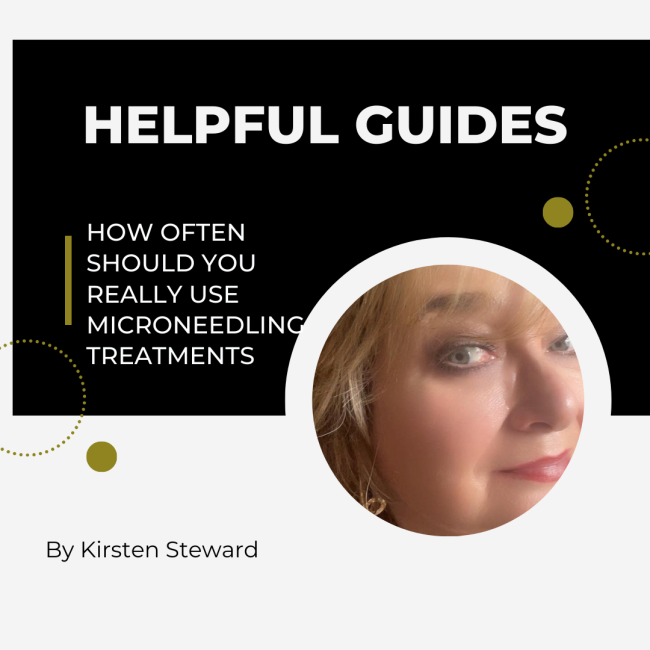
By Kirsten Steward, Level 4 skin therapist
As an expert in a professional skin therapists' group, I was asked to explain to people new to skin, and to non professionals, why it is so damaging to use home microneedling devices, particularly rollers, three times a week to a depth of 0.5mm on unprepared skin. That is exactly what was being recommended by a celebrity with zero training in skin science. So I thought I would share my answer here too.
First, a little basic skin science
Your skin doesn't know the difference between being grazed, burnt, cut or microneedled. As soon as it is injured, the inflammatory cascade begins and the skin starts to heal and knit itself back together.
The whole point of microneedling is to create controlled skin wounding. Controlled wounding sets off a controlled inflammatory response, which wakes up lazy fibroblast cells without trauma. Fibroblasts are the cells that produce collagen, elastin and hyaluronic acid.
Uncontrolled wounding sets off an uncontrolled inflammatory response, and that is bad news for both the health and the appearance of your skin.
For example, controlled wounding can be fantastic for melanin rich, deeper skin tones. But uncontrolled wounding of melanin rich skin can lead to hyperpigmentation and even keloid scarring, because the skin tends to over heal by producing too much collagen.
We all want to look younger for longer, ideally without injectables or surgery. Carried out correctly, microneedling is the perfect regenerative treatment.
Why do we need to kick start the fibroblasts?
Fibroblast activity slows down as we age. Elastin, the protein that gives skin its stretch, like a rubber band, is laid down mostly while we are young, and collagen production slows too. Research from the 1970s that is still widely cited found that the collagen content of skin falls by around 1% a year through adulthood.
We have many types of collagen throughout the body and the skin. They all do different jobs, but with needling we are mainly concerned with growing lots of healthy Type I.
Collagen Type I starts life as baby bundles of Type III. We need to nurture that Type III with daily antioxidants and SPF so it remodels into strong, mighty Type I. That acts like internal scaffolding, pushing the skin structure up and smoothing out wrinkles.
Hyaluronic acid (HA) also depletes as we age, and its production is linked to oestrogen levels, so by the time we are post menopausal our reserves are low. HA is a gel like, spongy substance that binds huge amounts of water, and the skin holds around 50% of all the hyaluronic acid in the body. Without plenty of HA for hydration, collagen and elastin lose their suppleness and skin loses volume.
The layers we are working with
The epidermis is mostly made up of keratinocytes, interspersed with melanocytes, Langerhans cells and stem cells. Imagine the protective brickwork of a house, but on the face it is thinner than a sheet of paper, so it needs plenty of TLC.
Keratinocytes begin their journey at the basal layer. Over roughly four weeks in young skin they travel to the surface, where they are programmed to die and shed. Our stem cells are going nowhere, so however old we get, we keep producing new keratinocytes.
Just before they shed, they become corneocytes. Don't be fooled, though. They play a vital role in the barrier function of our skin, protecting and hydrating it, so we don't want to lose them too early.
The dermis sits deeper than the epidermis, and its thickness depends on the area of the body and the age of the person. It is made up of the fibroblasts, collagen (mainly Type I) and elastin, suspended in HA and other glycosaminoglycans, plus a network of capillaries. We call this the extracellular matrix. When we are young it is plump and bouncy, and it gives our skin its thickness and volume.
The epidermis and dermis are joined at the dermal epidermal junction, anchored together with collagen Types IV, VII and XVII. These are the types most affected by photoageing, because they are closest to the sun.
How deep should microneedling go?
After decades of work by the pioneers of collagen induction therapy, we know that for general collagen regeneration, plus improvements in pigmentation, milder acne, open pores and oil regulation (yes, it can help all of those too), we don't need to go deep at all. Shallow, controlled needling that stimulates the epidermis is enough.
In the early days, aesthetic doctors believed the fibroblasts had to be targeted directly. As you can imagine, this was painful without numbing cream and very bloody, so it needed downtime. You weren't leaving the house for days!
More importantly, that far from controlled trauma could cause more harm than good in the long term. Delayed reactions such as granulomas and fibrosis can take months to appear, which is one reason it took so long for professional guidance to change.
Non medical skin therapists work within the depths set by their qualification and insurance, and deeper needling on the face is generally reserved for scar revision or particularly deep static wrinkles. It is certainly not normal salon practice, whatever the instructions in the box might suggest.
We know so much more about the skin than we did 20, 15 or even 5 years ago. We now understand that all the different cells talk to each other through intercellular communication, and we understand the importance of stimulating epidermal growth factors, the signalling proteins. If we stimulate the cells and growth factors of the epidermis in a controlled way, they communicate with the fibroblasts in the dermis without excessive trauma and pain.
"But you said 0.5mm is fine?"
Yes, but the face varies in thickness. Are you aware of the differences between the upper lip, cheeks, forehead, neck and eye area? Some areas are much thinner than others, so needling the entire face at the same depth is going to cause an uncontrolled wound.
And definitely not three times a week
How often you needle depends on a few factors, but for general regenerative treatments we are guided by age. In young skin, cell turnover and healing take around 28 days, and as we age this slows to 40 to 60 days. So the average time between treatments should be around four weeks, and for an older client I would probably make that six to eight weeks.
Needling three times in one week to 0.5mm means:
- Constant sensitivity. The Merkel cells and free nerve endings in the epidermis, and possibly even the sensory nerve endings in the dermis, will be on continual high alert. That leads to sensitivity and reactions to products and temperature, and it is going to feel sore.
- Prolonged inflammation. Excessive histamine means redness and swelling stay visible for longer, and ongoing inflammation can lead to post inflammatory hyperpigmentation. Nobody wants that.
- Healthy tissue under attack. White blood cells and an overproduction of enzymes such as collagenase and elastase, which clean up damaged tissue Pac Man style, become over zealous and start chomping on healthy tissue too.
- Wounds that never heal. Re epithelialisation, the resurfacing of a wound, is continually disturbed. The skin never gets the chance to heal, free radical damage increases, and healthy cells break down. That is the exact opposite of a regenerative treatment. Skin feels permanently dry and tight, and Type III collagen can't remodel as it should.
- Infection risk. Barrier function is impaired, which particularly affects the microbiome that protects us from invading pathogens. There is a real chance of bacterial, viral or fungal infection, especially with dirty needles. In clinic we only use single use, sealed, sterile cartridges, and we even record the batch number. We would never dream of using a cartridge more than once, let alone 24 times as some home instructions suggest. You can't sterilise a device contaminated with bodily fluid with a quick spray of alcohol. And just because it is your bacteria doesn't make it OK. What if someone else in the house borrows it?
- Extreme UV sensitivity. If you are on hormonal contraception or HRT, expect melasma to suddenly appear or worsen, and expect to burn more easily. Inflamed skin can become too sensitive even for a mineral SPF.
What is wrong with a derma roller?
Just as our skin science has evolved, so have microneedling devices. Professionals rarely use rollers now, because the needles enter and exit at an angle as they roll, which can tear the skin, especially with too much pressure. Imagine what can happen when someone untrained uses one three times a week.
Regulators are taking home devices seriously too. In 2025 the US FDA issued a safety communication on radiofrequency microneedling after reports of burns, scarring, fat loss, disfigurement and nerve damage, stating that it is a medical procedure, not a cosmetic treatment, and those devices should not be used at home. If you are weighing up the two treatments, this guide to RF microneedling versus microneedling explains the difference.
Why do I need to prepare my skin?
Your skin barrier has to be ready for needling, and professionally recommended products are essential before and after treatment.
Remember the collagen remodelling phase? That process needs antioxidants such as vitamin A and vitamin C. But just to complicate things, retinol is commonly stopped for around five days before and after needling because of sensitivity. This is exactly why professional guidance matters.
So by now you can see why microneedling three times a week, or even once, with a cheap, multi use derma roller is a bad idea.
What a professional treatment involves
A professional practitioner uses professional grade products and devices that meet the relevant safety standards, in a clinical environment with a sharps box and a hazardous waste contract.
And don't even get me started on contraindications! Before any regenerative treatment, we carry out a detailed consultation and health questionnaire to make sure your body is actually able to heal. If you have diabetes or an autoimmune condition, to name just two, your body's response to needling may be unpredictable.
Hygiene is everything
So much can go wrong with microneedling that I never cut corners, even when I treat myself.
I cleanse, peel and then disinfect my skin while wearing disposable gloves, so the surface is as clean as possible before creating over a million tiny channels. When I have finished needling, I apply a sterile saline gauze mask to cool and hydrate the skin, which by then feels like mild sunburn, before going under my LED light to support healing. Then I put on fresh gloves to apply a sterile recovery cream and SPF 50.
You don't need to be a professional to imagine what could happen if dirty fingers and contaminated jars of moisturiser get slapped onto freshly needled skin!
Is home microneedling worth the saving?
Professional needling doesn't come cheap. The disposables alone cost me around £50 for one treatment, so I completely understand why home needling sounds appealing. But don't fall for the marketing hype. Please think twice. This is one treatment that needs to stay in clinic.
If a professional treatment isn't in your budget right now, try a daily facial massage instead. It boosts circulation and is a lovely, safe way to care for your skin at home. And if you are having a course of professional microneedling, daily massage is a great way to support your results.
Please support, or become, a qualified professional skin therapist if you want the truly incredible results microneedling can give when it is carried out in a controlled, educated way, in a controlled environment.
Looking for a qualified practitioner near you? Search the directory for verified skin professionals and check their qualifications before you book.

More from Helen Ward
-
 Helpful information (clients) RF Microneedling vs Microneedling: Which Is Right for Your Skin?
Read more
-
 Helpful information (clients) How to Clean Lash Extensions: A Step by Step Guide
Read more
-
 Helpful information (clients) Is BIAB the Same as Builder Gel? BIAB, Gel Polish and Acrylic Explained
Read more