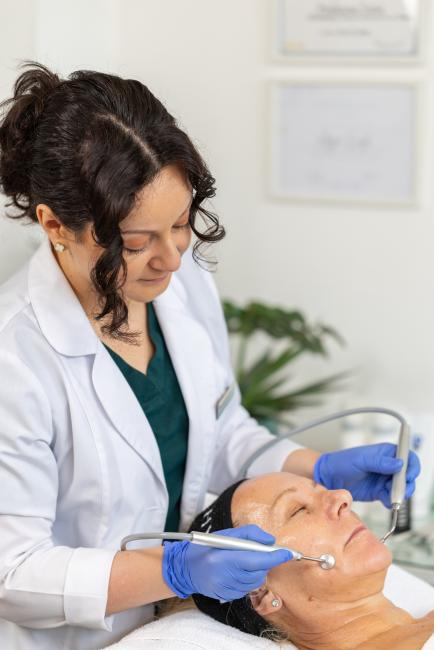
Ultrasound Therapy
Ultrasound therapy is an energy-based skin treatment that uses high-frequency sound waves to work within the skin without breaking the surface. In beauty and aesthetic settings it covers a range of devices, from gentler ultrasonic facials that help cleanse, exfoliate and drive skincare ingredients into the skin, through to focused ultrasound systems that heat deeper tissue to encourage the skin to firm and lift over time. The warming effect is designed to stimulate the skin's own collagen, so any tightening tends to build gradually over weeks and months rather than appearing straight away. People often choose it as a non-invasive option for the face, jawline, under-chin, neck and décolletage, or for a general skin-quality boost. It is not a substitute for surgery and results vary from person to person depending on skin, age and the device used. Because outcomes and safety depend heavily on the machine settings, depth and the skill of the person using it, this is a treatment where practitioner competence matters a great deal. A proper consultation should confirm whether ultrasound is suitable for you, what it can realistically achieve and how many sessions you might need.
Start with a thorough consultation so the practitioner can assess your skin, discuss your goals and check for anything that might make treatment unsuitable. Share your full medical history, including pregnancy, any metal implants, plates or pins in the treatment area, a pacemaker or other electrical implant, epilepsy, active cancer, thyroid conditions, and any recent injectables such as filler or toxin. Tell them about medicines too, particularly blood thinners or Roaccutane. In the days beforehand it usually helps to keep skin well hydrated and to avoid sunburn, fresh tanning, strong acids or retinoids, and any harsh exfoliation that could leave the skin sensitive. Arrive with clean skin, free of make-up if possible, and remove jewellery from the area. If you are unwell, have an active skin infection, cold sore or broken skin where treatment is planned, it is sensible to rearrange. Ask whether you should pause specific skincare beforehand, and raise any doubts about suitability before you book rather than on the day.
Your practitioner will usually cleanse the skin and apply a gel or conductive medium so the ultrasound handpiece can glide smoothly and transmit energy evenly. They then move the device slowly over the treatment area, often in sections, adjusting the settings and depth to suit your skin and the outcome you want. A gentle ultrasonic facial typically feels warm and soothing with a mild vibration, while focused ultrasound used for firming delivers heat to deeper layers and can feel warmer or produce brief prickling as energy is deposited. You may hear a soft buzzing and feel the head warming against your skin. Sessions commonly last from around twenty minutes to an hour depending on the device and the areas covered. Good practitioners check in with you throughout, ask about comfort and tailor the intensity accordingly, easing off over more sensitive spots such as along the jaw or near the eyes. You should never be left to tolerate genuine pain.
Aftercare is usually straightforward. Your skin may look a little flushed or feel slightly warm for a short while, so treat it gently for a day or two. Keep the area clean, moisturised and protected, and apply a broad-spectrum SPF each morning, as skin that has been warmed or lightly exfoliated can be more sensitive to the sun. In the first day or so it is generally wise to avoid very hot baths, saunas, steam rooms, intense exercise, swimming and anything that heats or irritates the skin further. Hold off on strong actives such as retinoids, vitamin C and exfoliating acids until any sensitivity settles, then reintroduce them gradually. Drink plenty of water, since good hydration supports the skin. If you notice anything beyond mild redness, follow the aftercare advice you were given and contact your practitioner. For firming treatments, remember the collagen response builds slowly, so continuing gentle, consistent skincare and sun protection helps you get the most from your results.
The most important safety factor with any ultrasound device is the person operating it. Choose a trained, competent practitioner who understands the machine, the correct settings and the right depth for your skin, and who carries appropriate insurance for the treatment. Because the energy heats tissue, poor technique, settings that are too aggressive or lingering in one spot can risk burns, blistering or changes in pigment, and darker skin tones can be more prone to pigment issues, so experience across different skin types matters. A responsible practitioner assesses your suitability first, works methodically, keeps the handpiece moving and checks your comfort throughout. With focused, heat-based facial devices there is also discussion around loss of facial fat and volume, which can leave leaner or more mature faces looking hollow, so this should be weighed up honestly during your consultation. Make sure the clinic is clean, the equipment is well maintained, and you are given clear aftercare and a point of contact should you have any concerns afterwards.
Ultrasound therapy is not suitable for everyone, and a good practitioner will screen for this. It is generally avoided during pregnancy, and over or near a pacemaker or other electrical implant, metal plates, pins or joint replacements in the treatment area, and areas of active cancer. Caution or avoidance also applies with epilepsy, thyroid disorders when treating the neck, active skin infections, cold sores, open or broken skin, and conditions affecting healing or sensation. Tell your practitioner about blood thinners, Roaccutane, recent injectable treatments and any implanted devices. If you have a significant medical condition, or you are unsure whether treatment is safe for you, speak to your GP or a suitably qualified healthcare professional before going ahead. Ultrasound therapy in a beauty setting is a cosmetic treatment and should not be used to diagnose, treat or manage a medical or skin condition. If you have a health concern about your skin, seek proper medical advice rather than relying on a cosmetic device.
A skin patch test is not usually the standard for ultrasound therapy, because the treatment works through energy rather than a chemical that can trigger an allergy. What matters far more is a proper pre-treatment consultation and contraindication check. Your practitioner should review your medical history, medicines, implants and skin condition, confirm the area is healthy and suitable, and set realistic expectations before starting. If you have reactive or sensitive skin, or you are new to a particular device, a cautious first session at conservative settings over a small area is sensible. This careful screening protects you and also matters for UK liability, since an insured practitioner who skips a proper assessment and consent process could be found at fault if something goes wrong. Always give honest, complete information at your consultation so suitability can be judged accurately.
Be wary if no consultation or medical history is taken, or if suitability and contraindications are not discussed at all. Other warning signs include a practitioner who cannot explain their training, the device or the settings they are using, premises that look unclean or equipment that seems poorly maintained, and pressure to buy large course packages before your skin has even been assessed. Promises of dramatic, guaranteed or permanent results, or claims that the treatment can cure a medical or skin condition, should raise doubts. During treatment, genuine pain, burning, a smell of scorching or being told to simply put up with discomfort are not acceptable. No clear aftercare advice, no insurance, and no point of contact for problems afterwards are also reasons to walk away and look elsewhere.
Good practice starts with an unhurried consultation that covers your goals, medical history, suitability and realistic expectations before anything is booked. A reassuring practitioner is trained and competent with the specific device, insured for it, and happy to explain how it works, what settings they use and why. They keep the treatment area clean, use well-maintained equipment, and tailor the intensity and depth to your skin, checking your comfort throughout and easing off where needed. They are honest about what ultrasound can and cannot achieve, including the gradual nature of any firming results and the possibility that you may need more than one session. Clear written aftercare, sensible pricing without high-pressure sales, and an obvious way to contact them if you have concerns afterwards are all signs you are in careful hands.
- What training and experience do you have with this specific ultrasound device, and are you insured to perform it?
- Is ultrasound therapy suitable for my skin type, age and the results I am hoping for?
- What realistic results can I expect, how many sessions might I need, and how long will they last?
- How do you decide the settings and depth, and how do you protect against burns or pigment changes?
- Are there any risks of facial volume or fat loss for my face, and how do you manage that?
- What aftercare will I need, and how do I contact you if I have any problems afterwards?
Most people find ultrasound therapy comfortable and relaxing. A gentle ultrasonic facial usually feels like a warm, smooth handpiece gliding over the skin with a mild vibration, and you may hear a faint buzzing. Focused ultrasound used for firming feels warmer, and as energy reaches the deeper layers you might notice brief prickling, heat or a mild tingling sensation in short bursts, which typically eases as the head moves on. Sensitive areas such as along the jawline, near the brow or over bony spots can feel a little stronger. You may feel slightly warm or flushed afterwards. Sharp pain, burning or intense heat is not normal, so tell your practitioner straight away if the treatment feels genuinely uncomfortable so they can adjust it.
One of the appeals of ultrasound therapy is that downtime is typically minimal. Many people return to their usual day straight afterwards, perhaps with a little warmth or redness that settles within a few hours. Gentler ultrasonic facials tend to leave the skin looking refreshed with no real recovery needed, while focused ultrasound used for firming may leave the area slightly tender, pink or occasionally a little puffy for a day or two. Any results from collagen stimulation develop gradually over the following weeks and months rather than immediately. If you experience marked swelling, blistering, numbness or lasting discomfort, that is not typical and you should contact your practitioner promptly.
How quickly you see results depends on the type of ultrasound. Gentle ultrasonic facials often leave skin looking cleaner, brighter and more refreshed fairly soon, though the effect is subtle and builds with regular sessions. Firming treatments that stimulate collagen work more gradually, with any tightening or lifting developing over roughly two to three months and sometimes continuing beyond that. Results are not permanent, because skin continues to age naturally, so many people choose occasional maintenance sessions to keep the effect topped up, often once or twice a year for firming treatments or more regularly for skin-quality facials. Your practitioner can tailor a plan to your skin and goals. You will get far more from your investment by protecting the results at home with daily broad-spectrum SPF, good hydration and a consistent skincare routine. Bear in mind that outcomes vary from person to person, and ultrasound tends to refine and support the skin rather than deliver a dramatic surgical change.